Table of Contents
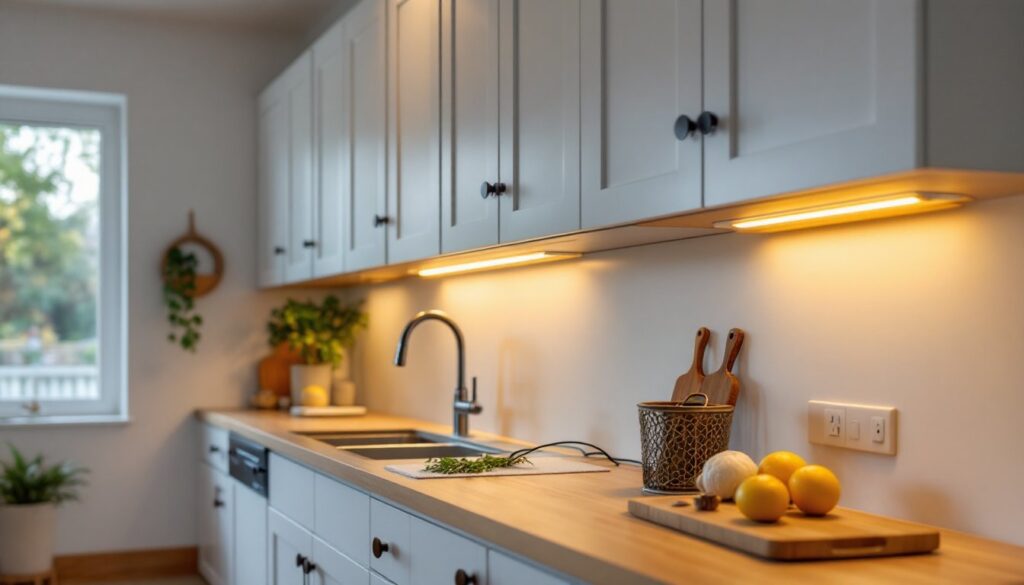
ToggleThe kitchen sink isn’t just a functional utility, it’s where you spend real time, washing dishes, prepping meals, and looking out the window during quiet moments. Without proper lighting, this workspace becomes a strain on your eyes and a safety hazard. Over-sink lighting transforms this area from dim and uninviting to bright and functional, while also adding a design element that pulls your entire kitchen together. Whether you’re renovating or giving your kitchen a quick refresh, choosing and installing the right over-sink lighting fixture matters more than most homeowners realize.
Key Takeaways
- Over-sink kitchen lighting eliminates shadows and eye strain while improving safety during meal prep and dishwashing by positioning light directly where you need it most.
- Pendant lights are the top choice for over-sink fixtures, requiring 12 to 20 inches of clearance above the counter, with double pendants spaced 24 to 36 inches apart for wider sinks.
- Aim for 1,000 to 1,500 lumens per fixture with a color temperature of 3000K to 4000K for optimal task lighting that balances brightness with comfort.
- LED bulbs are the standard choice for modern over-sink lighting, offering energy efficiency and support for dimming without heat concerns of older incandescent options.
- If reusing existing electrical connections, over-sink lighting installation can be a manageable DIY project; for new wiring, hire a licensed electrician to ensure safety and code compliance.
- A well-chosen sink lighting fixture becomes a visible design anchor in your kitchen while providing one of the highest ROI improvements for daily functionality.
Why Kitchen Sink Lighting Matters for Your Home
Most kitchens rely on a single overhead fixture, which casts shadows directly over the sink where you need light most. That’s a problem. Your hands, body, and whatever you’re working on block light from above, leaving you squinting at dirty dishes or prep work.
Proper over-sink lighting eliminates shadows and reduces eye strain during everyday tasks. It also improves safety, better visibility means fewer cut fingers and less chance of breaking glassware. Beyond function, sink-focused lighting is a design win. A well-chosen fixture becomes a visual anchor above the sink, adding character and warmth that an impersonal overhead light never will.
Many homes also have windows above the sink, and good artificial lighting ensures the space works at night when natural light disappears. Consider that kitchens generate heavy use: cooking, cleaning, assignments sessions, and morning coffee routines all happen at or near the sink. Investing in dedicated, well-positioned lighting pays off daily.
Types of Over-Sink Lighting Fixtures
Pendant Lights and Hanging Options
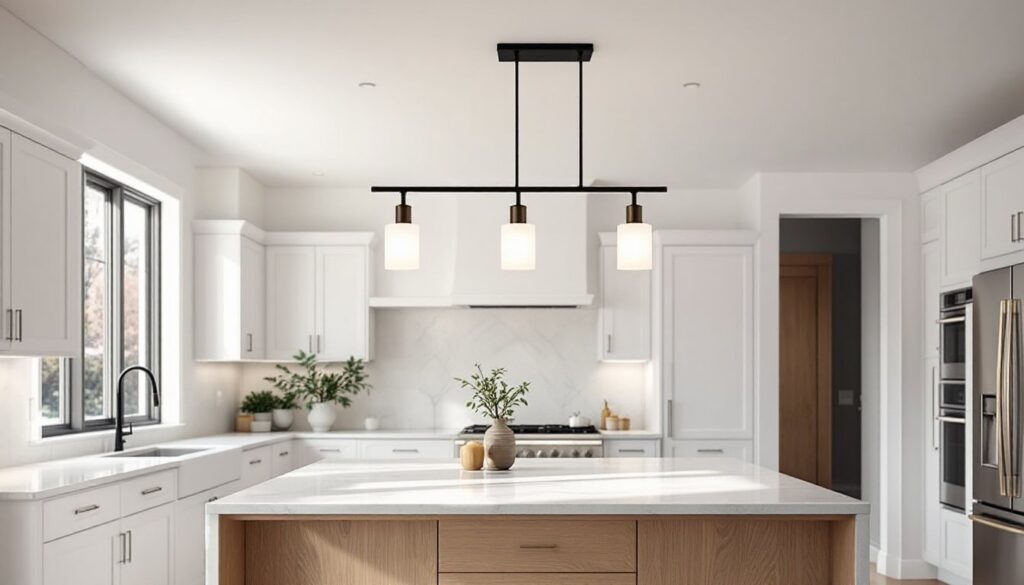
Pendant lights are the go-to choice for kitchen sinks and for good reason. They hang from a single cord, chain, or stem and position light directly where you need it. Most homeowners choose single pendants for narrow sinks or double pendants (one on each side) for wider sinks and islands.
Common styles include clear glass bowls (showing off the bulb and providing bright, diffused light), frosted or opal glass (softer, more forgiving if the bulb inside isn’t pretty), and opaque metal shades (directing light downward, modern aesthetic). Pendant lights work well in most kitchen styles, industrial lofts, farmhouse, transitional, and contemporary kitchens all have pendant options. The Remodelista guide to pendant lights for kitchen sinks showcases curated fixtures that balance form and function across design aesthetics.
When sizing pendants, aim for 12 to 20 inches of clearance between the fixture and the counter surface. This keeps the light effective without blocking your view or hitting your head. For two pendants, space them 24 to 36 inches apart if your sink is wide enough, measure your actual space before ordering.
Recessed and Flush-Mount Solutions
If your kitchen has limited ceiling height, soffit limitations, or low ceilings that make pendants impractical, recessed lights or flush-mount fixtures work. Recessed cans sit inside the ceiling and direct light downward without hanging below. Flush-mount fixtures (like small chandeliers or close-to-ceiling domes) attach directly to the ceiling with minimal protrusion.
Recessed lighting requires cutting into your ceiling and running electrical rough-in, definitely a job for someone comfortable with wiring or a licensed electrician if you’re not. Flush-mounts are easier: many are simply a bracket, junction box, and fixture body that screw together. These options don’t provide the design statement of pendants, but they solve real space and aesthetic problems. If your sink sits under a structural beam, soffit, or unusual ceiling, recessed or flush options are often your only choice.
Choosing the Right Brightness and Color Temperature
Two specs matter: lumens (total light output) and color temperature (how warm or cool the light feels, measured in Kelvin).
For task lighting over a sink, aim for 1,000 to 1,500 lumens per fixture from a modern LED bulb. That’s roughly equivalent to a 75 to 100-watt incandescent in brightness, but uses a quarter of the energy. If you choose two pendant lights, each can be 500 to 750 lumens, combined they’ll light the space evenly without glare. Check the fixture’s rated capacity and bulb specifications, some decorative pendants max out at 40 watts or 400 lumens, which won’t cut it for task lighting.
Color temperature ranges from 2700K (warm, yellowish) to 5000K+ (cool, blue-white, like daylight). For kitchen sinks and work surfaces, 3000K to 4000K is the sweet spot. This range is bright enough for tasks but warmer than harsh office lighting. If your kitchen has warm wood cabinetry, 3000K flatters the wood and feels cozy. If you have cool whites, grays, or stainless steel, 3500K to 4000K looks crisp and modern. Test a bulb at home if possible, color temperature is subjective, and what looks good in a showroom might feel wrong at 7 a.m. when you’re making coffee.
LED bulbs now come in all color temperatures and are standard: avoid incandescent or halogen in new fixtures due to heat output and short lifespan. Many modern fixtures support dimmable LEDs, which is a bonus for adjusting mood or reducing eye strain at different times.
Installation and Design Considerations
Before shopping, measure your sink width and the distance from the sink to the bottom of existing cabinets above. This clearance determines which fixtures fit without hitting your head or blocking access. Most over-sink fixtures hang 12 to 20 inches above the counter: if you have a lower soffit, you might need flush-mounts or shallow pendants.
Electrical work depends on your setup. If there’s already a ceiling fixture or switch above the sink, you can often reuse that junction box and wiring. If not, you’ll need to run new 14-gauge or 12-gauge electrical wire (depending on the circuit load) from your breaker panel or a nearby outlet, standard kitchen circuits are 20-amp, 120-volt. Improper wiring is dangerous. If you’re unfamiliar with electrical work, hire a licensed electrician. Most installations cost $200 to $500 in labor.
For installation steps, if reusing existing electrical:
- Turn off power at the breaker and confirm power is off with a voltage tester.
- Remove the old fixture and disconnect the wires (black to black, white to white, bare copper ground).
- Install the new fixture’s bracket or canopy, securing it to the junction box.
- Connect wires: black (hot) to black, white (neutral) to white, ground to ground. Twist together and cap with wire nuts.
- Tuck wires into the junction box, screw or bolt the fixture body in place, and install the bulb and shade.
- Restore power and test.
If running new electrical, that’s beyond DIY scope for most. A licensed electrician will run the wire in conduit, install a new junction box if needed, and connect it to an existing circuit or create a new one. Building codes vary by jurisdiction: some areas require permits for new circuits. Check with your local building department before starting.
For design, consider your kitchen’s overall style. Pendant lights are highly visible, so choose something you’ll enjoy seeing every day. Look at real-home photos of over-sink lighting designs for inspiration aligned with your aesthetic. If your kitchen lacks defined style, a simple, timeless pendant in brushed brass, matte black, or clear glass pairs with almost anything and ages well.
Conclusion
Over-sink lighting is one of the highest-ROI kitchen projects: it’s visible, functional, and often requires no structural work. Whether you choose pendant lights, recessed fixtures, or a hybrid approach, prioritize task brightness (1,000+ lumens), a warm-to-neutral color temperature (3000K–4000K), and fixtures that fit your space and style. If electrical work intimidates you, bring in a pro, safety matters more than saving a few hundred dollars. A well-lit sink transforms how your kitchen feels and functions every single day.