Table of Contents
ToggleLED lighting has transformed from a novelty energy-saver into the backbone of modern living room design. What makes LEDs so practical for homeowners isn’t just the lower electricity bill, it’s the flexibility to layer light in ways traditional fixtures simply couldn’t. You can dial in the exact mood you want, from energizing morning brightness to that perfect wind-down glow at night. This guide walks you through real LED lighting ideas that work for living rooms of any size, budget, and style, with the clarity and confidence you need to execute them yourself.
Key Takeaways
- LED lighting for living rooms works best when layered with ambient, task, and accent light rather than relying on a single overhead fixture.
- Warm white (2700K) LED bulbs should comprise at least 70% of your living room lighting to create an inviting, cozy atmosphere that feels residential.
- Recessed downlights spaced 4-6 feet apart, wall sconces at eye level, and dimmable floor lamps provide the foundation for functional and comfortable living room LED lighting ideas.
- Peel-and-stick LED strips and under-shelf lighting are 100% DIY solutions that require no wiring, permits, or electrical expertise.
- Installing a dimmable switch ($30-$50) maximizes LED energy efficiency and gives you mood control without the need for expensive smart home upgrades.
- Picture lights, uplighters, and track lighting add professional accent lighting that highlights art and architectural features while consuming 50-80% less power than older halogen systems.
Ambient LED Lighting for Comfort and Atmosphere
Ambient lighting is your foundation, the general, overall light that lets you move through the room safely. The mistake most people make is relying on a single overhead fixture, which casts harsh shadows and feels institutional. Instead, think layering.
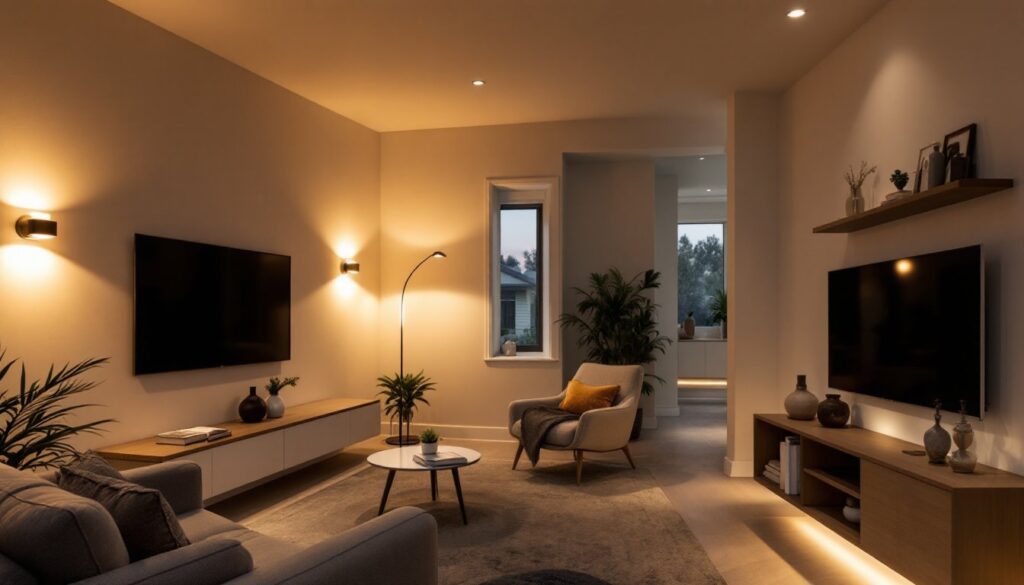
Recessed LED downlights are the DIY workhorse here. They’re clean, modern, and if you’re working with a finished ceiling, you can install retrofit cans (which pop into existing holes) without running new wiring. Standard 5-inch or 6-inch recessed cans work well in most living rooms. Space them 4 to 6 feet apart for even coverage, too far and you’ll see dark patches: too close and you’re wasting money.
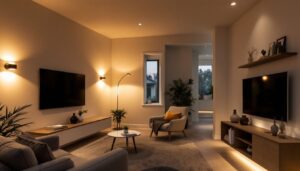
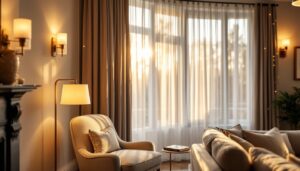
Wall Sconces: Transform Your space with warm ambient light on either side of a focal point like a TV or fireplace. Mounted at eye level (around 60 inches from the floor), they soften the overall light and eliminate the “cave with one bright spot” effect. Look for warm white LEDs (2700K color temperature), which feels inviting rather than clinical. LED equivalents typically draw 8-12 watts per fixture, a fraction of what incandescent sconces consumed.
Task Lighting Solutions for Reading and Activities
Task lighting is direct, focused light for specific activities: reading, hobbies, board games, or assignments. It prevents eye strain and lets you keep ambient light dimmer and more relaxing.
Arched floor lamps with LED bulbs are ideal for reading because they bend light directly over a chair without glare. Look for dimmable LED bulbs (check the packaging, not all LEDs dim smoothly) with a color temperature around 3000–4000K for reading comfort. That range is bright enough to prevent squinting but warmer than the blue-white flicker that disrupts sleep if you read at night.
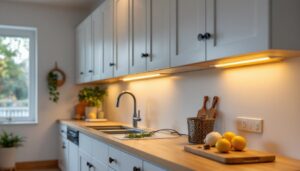
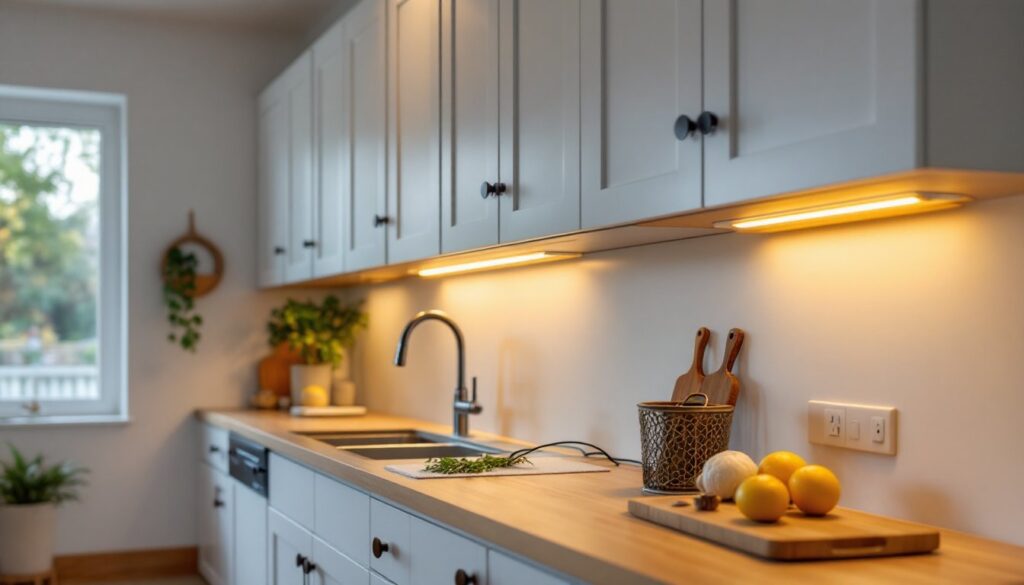
Under-shelf or cabinet LEDs work too if you have shelving, a console table, or built-ins in your living room. They’re Professional Lighting: Transform Your space without claiming floor or table real estate. Peel-and-stick LED strips (12V or 24V, warm white) install in minutes and hide the light source so you get illumination without seeing the fixture itself, no shadow or glare. Make sure any strip you buy is rated for interior use and has adhesive that actually sticks to your surface (walls, wood, and painted finishes all behave differently).
Accent Lighting to Highlight Décor and Architectural Features
Accent lighting is the showoff tier, it highlights art, architectural details, or decorative objects and adds depth and drama to a room. Think gallery lighting, not Christmas lights.
Picture lights mounted above framed art deliver a professional gallery feel. LED picture lights (typically 6–10 watts) mount directly above the frame and angle downward, minimizing glare and dust reflection. They’re small enough that no one notices the fixture, but everyone notices the art suddenly pops.
Wall washers or uplighters graze light across textured walls, shiplap, or architectural features. If your living room has a feature wall or exposed brick, position an LED uplighter or directional recessed light at the base pointing upward. The angle creates shadow and dimension that’s impossible with ambient light alone. For adjustable accent work, track lighting with LED spotlights gives you flexibility, you can aim and adjust them as your décor changes. Track is mounted to the ceiling and wired like a regular circuit, so it’s a moderate DIY job if you’re comfortable running electrical (or budget for a licensed electrician if you’re not). Modern LED tracks consume 50–80% less power than old halogen systems and run cool to the touch.
LED Strip Lights and Smart Color Options
LED strip lights are the versatile wild card. Adhesive-backed or clip-mounted, they can line shelves, run along baseboards, hide behind crown molding, or outline alcoves. They’re also where color-changing enters the game.
Most LED strips come in warm white only, perfect for ambiance. But RGB (red-green-blue) or color-tunable strips let you shift from cool to warm, or add accent colors for entertainment or mood changes. They require a controller (usually wireless remote or app-based), which adds cost ($30–$60 typically), but gives you real flexibility.
When you buy strips, check the wattage per meter (usually 5–12W per meter) and calculate your total run length. Undersized power supplies overheat and fail: oversized ones waste money. Most strips daisy-chain, so measure your layout before you buy. Also verify the LED type (SMD 5050 or 2835 are common), it affects brightness and color quality. Cheap strips skimp here and look dim or orange-cast even at full brightness.
Installation is straightforward: clean the surface (alcohol wipe removes dust and oils), peel and stick or clip in place, run the wire to a power source, and connect the controller. If you’re using a smart controller, Home Decor Design Ideas: Transform your living room with voice commands or app scheduling. One caveat: adhesive failure is common in humid bathrooms or kitchens, but living rooms are dry enough that quality strips stay put for years.
Choosing the Right Color Temperature for Your Space
Color temperature (measured in Kelvin, or K) is the single biggest factor in how “warm” or “cool” your lighting feels. Get this right and your living room feels intentional: get it wrong and it feels like a hospital or a nightclub.
2700K (warm white) is the gold standard for living rooms. It mimics incandescent bulbs and feels cozy, intimate, and residential. Use it for ambient, accent, and most task lighting. 3000K (soft white) is slightly brighter but still warm, good if you like a touch more visibility without losing coziness. 4000K (neutral white) is the threshold for “cool.” It’s energizing and good for kitchens or workspaces, but in a living room it can feel sterile if that’s all you use.
5000K and above (daylight/cool white) is for specific task needs, reading or detail work, not ambient use. Many people default to 4000K or 5000K LEDs because they’re cheap and bright, then wonder why their living room feels like an office.
Here’s the practical fix: choose warm white (2700K) for at least 70% of your living room lighting. Supplement with 3000K or 4000K task lights where you need extra visibility. If you use Rustic Lighting: Transform Your Home with vintage or traditional décor, 2700K is non-negotiable. Modern or industrial spaces can play with neutral tones, but you’ll still want warm ambient to avoid coldness.
Budget-Friendly and Energy-Efficient Installation Tips
DIY LED retrofits beat contractor quotes by 60–70%, but only if you plan smart.
Start with what you have. Before ripping out fixtures, swap in LED bulbs in existing lamps and overhead fixtures. A 60W-equivalent A19 LED costs $4–$8 and screws into any standard socket. You’ll see an immediate energy drop and a warmer glow if you chose 2700K. This costs under $50 for a whole room and requires zero installation skill.
Next, add one or two task or accent layers, a floor lamp here, an under-shelf strip there. Build incrementally rather than gutting the room at once. This spreads cost, lets you test what works, and gives you confidence before tackling larger projects.
For structural work like recessed lights or track, budget for a licensed electrician if you’re not comfortable running circuits. It’s not optional if you live somewhere with inspection requirements (most jurisdictions do for any permanent wiring). A single recessed light circuit with 4–6 lights costs $300–$600 installed, depending on your region and whether you have accessible attic space. Peel-and-stick LED strips, on the other hand, are 100% DIY, no permits, no wiring, no risk.
Living Room Lighting: Transform Your Space on a budget by prioritizing dimmer switches. A simple dimmer replaces your existing switch ($30–$50 total) and lets you adjust brightness, lower light = lower energy use and better mood control. Make sure you buy dimmers rated for LED (many old dimmers buzz or flicker with LEDs: modern ones don’t).
Finally, take advantage of modern Home Decor and Design Ideas: Transform and consider smart bulbs or controllers if you’re willing to invest $15–$40 per product. They add scheduling and remote control, which encourages you to actually use task and accent lighting intelligently instead of maxing out ambient all the time.
Conclusion
LED living room lighting isn’t about buying the fanciest fixtures or going fully smart-home. It’s about layering ambient, task, and accent light in a way that matches your lifestyle and budget. Start with warm-white ambient, add task lighting where you actually need it, and use strips or uplights to bring dimension and personality. The result? A living room that feels welcoming at 6 AM and restorative at 10 PM. Your DIY skills will grow with each layer you add, and your electricity bill will thank you.