Table of Contents
ToggleOutdoor pool lighting is one of the fastest ROI improvements a homeowner can make, transforming a nighttime hazard into a stunning focal point that extends pool season well into the evening. Beyond the Instagram-worthy glow, proper pool lighting is fundamentally about safety, functionality, and creating a space your family actually wants to use after sunset. Whether you’re installing a new pool or upgrading an existing one, understanding your lighting options and how to integrate them strategically will help you avoid costly mistakes and achieve results that look professional without requiring a contractor’s invoice.
Key Takeaways
- Outdoor pool lighting is essential for safety, function, and aesthetics—proper visibility prevents drowning risks while extending usable evening hours and adding home value.
- LED underwater lights consume 75% less energy and last 25,000+ hours compared to halogen alternatives, saving hundreds of dollars per season when paired with timers and smart controls.
- A layered lighting approach combining underwater task lights, deck/perimeter lighting, and accent fixtures creates professional results without overwhelming the space or wasting energy.
- Low-voltage (12V–24V) systems are safer, more efficient, and often DIY-friendly, but always check local electrical codes and hire a licensed electrician for line-voltage wiring near pools.
- Warm white (2700K) light is ideal for entertainment and ambiance, while cool white (4000K–5000K) better serves safety and algae control—avoid color-changing effects for regular use.
- Proper installation includes waterproofing niche lights with pool-rated silicone, ensuring GFCI protection, bonding fixtures to the pool’s electrical grid, and using UV-resistant, submersion-rated cable in conduit.
Why Outdoor Pool Lighting Matters Beyond Aesthetics
Pool lighting serves three critical roles: safety, function, and ambiance. From a safety standpoint, poor visibility is a genuine drowning risk, the CDC lists inadequate lighting as a contributing factor in residential water accidents. You need enough light to see the pool’s bottom, edges, and any obstacles in the surrounding deck area, especially if children or elderly guests use the pool.
Functionally, good pool lighting extends usable hours and protects your investment. Underwater lights deter algae growth by controlling light exposure and making nighttime cleaning easier. Deck lighting prevents trips and falls while helping guests navigate safely around wet surfaces. From an aesthetic perspective, well-planned lighting highlights the pool’s water, creates focal points in your landscape, and adds perceived value to your home. Studies show outdoor living spaces with thoughtful lighting are among the first features prospective buyers notice.
Types Of Outdoor Pool Lighting Systems
Underwater Lights And Accent Fixtures
Underwater lights are typically available in three varieties: LED, halogen, and incandescent (increasingly rare). LEDs are now the default choice for new installations, they consume 75% less energy than halogen equivalents, last 25,000+ hours, and produce consistent color without heat buildup.
Underwater fixtures mount directly to the pool wall (called niche lights) or sit on the floor. Niche installations are standard in new pools: retrofit options include portable submersible units or adhesive-backed LED strips rated for pool use. Color-changing LED pools lights let you adjust hue via remote control, fun for entertainment, though white or cool-blue light is best for safety and algae control.
Accent fixtures, uplights, spot lights, and architectural washers, illuminate waterfalls, landscaping, and nearby structures. These create depth and drama but are secondary to primary pool lighting. Place accent fixtures outside the pool’s main swimming area to avoid blinding swimmers.
Deck And Perimeter Lighting Options
Deck lighting keeps people safe and defines the pool’s edges. Bollard lights (short, mushroom-shaped posts) are popular for pathways and perimeters, they’re low-profile, durable, and distribute light without creating glare. Recessed deck lights sit flush with concrete or composite decking and work well in modern settings but require careful installation to avoid water pooling around fixtures.
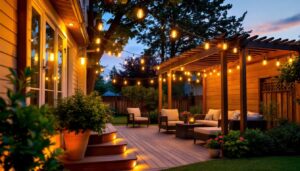
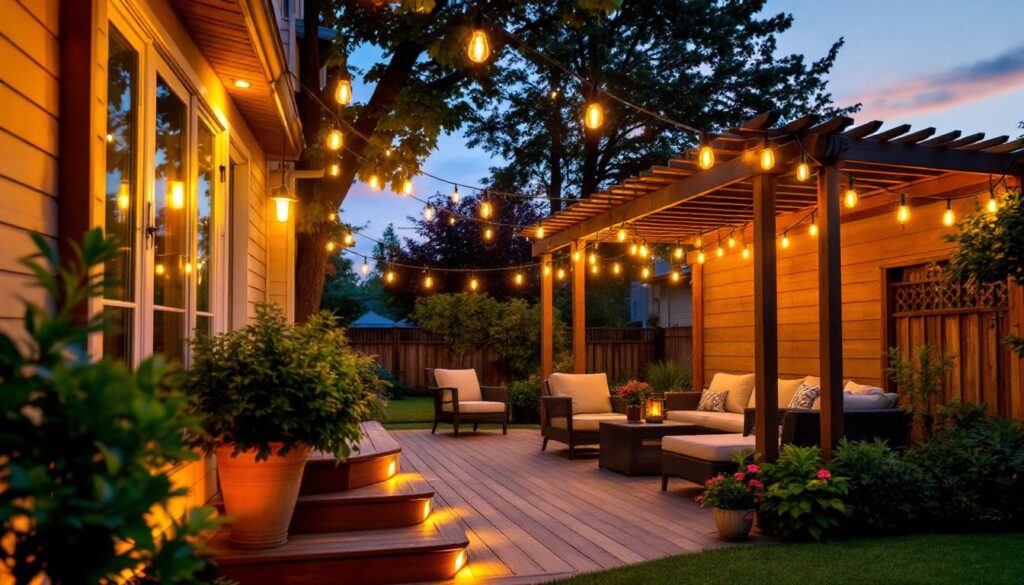
String or pendant lights hung overhead create ambient lighting and visual interest. Make sure overhead fixtures are rated for damp or wet locations (consult the fixture’s UL listing). Solar deck lights offer a cord-free option but are generally dimmer and less reliable in cloudy climates, use them as supplementary accent, not primary safety lighting.
Perimeter wall packs and soffit lights illuminate landscaping and house walls, extending the lighted zone beyond the pool itself. This prevents dark “dead zones” and makes the backyard feel larger and more cohesive.
Energy-Efficient Lighting Solutions For Your Pool
LED technology has matured dramatically in the past five years. A typical 12V LED niche light (50W-equivalent) uses about 7–10W and costs roughly $0.01 per hour to operate versus $0.08–$0.12 for a halogen equivalent running at similar brightness. Over a season of nightly use, LEDs save hundreds of dollars.
Lowering wattage and runtime is just as important as choosing efficient bulbs. Use timers or smart controls to run lights only during evening hours (sunset to 11 PM, for example) rather than all night. Motion sensors on deck fixtures reduce unnecessary lighting in low-traffic zones.
Poolside lighting systems often require a dedicated 15A or 20A circuit per NEC (National Electrical Code). Most pool-rated LED fixtures operate on 12V or 24V low-voltage systems, safer than line voltage and more efficient for long cable runs. If you’re running cable more than 50 feet, low-voltage systems minimize voltage drop and heat loss. Larger pools or multiple circuits may justify investing in a smart pool controller, which integrates lighting, pump, heater, and sanitation into one app-based system.
Water features like fountains and spillways benefit from accent lighting but don’t require the same light intensity as the main pool basin. Directing most energy toward safety-critical areas (pool floor, deck edges) and using subtle accents keeps both energy and costs in check.
Installation And Safety Considerations
Before you purchase a single fixture, check your local electrical codes and whether a permit is required. Most jurisdictions require a licensed electrician for any line-voltage wiring near a pool (typically anything within 5–10 feet of the water). Low-voltage systems are often DIY-friendly but still need to meet code for bonding and grounding.
Always wear safety glasses, work gloves, and a respirator when cutting or drilling concrete and tile around the pool. If you’re retrofitting niche lights into existing pools, this step generates a lot of dust.
Underwater wiring must be rated for submersion and buried in conduit or, if exposed, must be colored to blend with the pool interior. Never improvise with extension cords or standard Romex cable, the moisture and chlorine will corrode it within months. Use outdoor-rated, UV-resistant cable in conduit, and always run it through the pool’s main electrical disconnect or a GFCI (ground-fault circuit interrupter) protected outlet.
Niche installation requires careful waterproofing. Use silicone sealant rated for pools (not standard caulk), and allow it to cure fully before pressurizing the niche. If water pools around electrical fixtures on the deck, you’ve got a drainage problem, regrade the area or add a perimeter drain. Wet feet near an electrical outlet are a hazard.
For in-ground pools, bonding the lighting fixtures to the pool’s bonding grid is mandatory in most areas, this prevents stray electrical potential from causing shock. Hire a licensed electrician if you’re unsure. Above-ground pools have simpler bonding rules but still require a GFCI outlet within 6 feet of the pool perimeter.
Test all fixtures and controls before the pool season. Cracked or corroded fixtures should be replaced immediately, not taped over.
Design Tips For Stunning Pool Lighting Effects
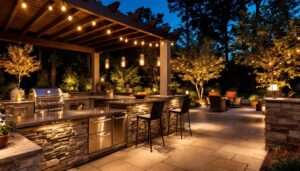
Lighting design is about layering, combine task, accent, and ambient light to create dimension. Your primary layer is the underwater lighting (task), which illuminates the pool for safety and visibility. The second layer is deck and perimeter lighting (task + ambient), which lights pathways and creates soft ambient glow. The third is accent lighting (ambient + drama), uplights in landscaping, wall washers on the house, or subtle color shifts in the water.
Color temperature matters. Warm white (2700K) feels relaxing and is flattering to skin tones, good for entertaining and lounge areas. Cool white (4000K–5000K) is more clinical but better for safety-focused areas and algae control. Color-changing LEDs are tempting, but reserve them for special occasions: consistent, warm white serves 90% of your usage.
Avoid overlighting. A common mistake is installing too many deck lights, this washes out the water’s appeal and creates harsh shadows. Aim for about 1–2 foot-candles on decks and 2–3 foot-candles on pool water for safe visibility. If you can read a book comfortably on the deck at night, you have enough light.
Use uplighting, not downlighting alone, for landscaping and trees. Uplighting creates drama and depth without casting awkward shadows. Position accent lights away from seating areas to avoid glare, lights should illuminate their targets, not your guests’ faces.
For those looking to explore specific product options, underwater landscape lights showcase various designs suitable for pools and water features, giving you real-world examples of fixture styles and color options. Deck lighting choices range from simple bollards to integrated composite boards with built-in LEDs, browse home improvement guides and design resources for current trends and installation walkthroughs.
Layering is what separates amateur backyard lighting from polished results. Start with the essentials (underwater + deck lights), then add accents once you see what the space actually needs.