
In a world where first impressions matter, professional lighting can be the secret sauce that transforms an ordinary space into an extraordinary one. Imagine walking into a room that feels like a scene from a movie—soft glows, dramatic shadows, and just the right touch of ambiance. It’s not magic; it’s the power of expertly designed lighting.
Overview of Professional Lighting
Professional lighting plays a pivotal role in shaping the ambiance of any space. Designers utilize various lighting techniques to achieve desired effects, ranging from soft illuminations to stark contrasts. Color temperatures also greatly influence moods; warm colors create comfort while cooler tones provide focus.
Types of professional lighting include ambient, task, and accent lighting. Ambient lighting serves as the primary source of light, filling the room with overall brightness. Task lighting focuses on particular areas, enhancing functionality, such as in kitchens and offices. Accent lighting adds drama, highlighting art or architectural details to create a focal point.
Lighting fixtures offer versatility in design and application. Chandeliers provide elegance in dining areas, while track lighting allows flexibility in targeting specific areas. Smart lighting solutions enhance control over brightness and color, allowing customization to fit specific activities or preferences.
Placement of lighting fixtures significantly impacts the effectiveness of the overall design. Overhead lights should be positioned to minimize shadows and provide balanced illumination. Additionally, wall sconces can create a sense of depth, adding layered lighting effects.
Energy efficiency is another critical consideration in professional lighting. LED technology offers significant advances in longevity and cost savings, reducing energy consumption by up to 75% compared to traditional bulbs. By integrating energy-efficient solutions, professionals not only support sustainability but also enhance the aesthetic quality of their designs.
Ultimately, professional lighting is a crucial aspect of interior design. It transforms spaces, affects perceptions, and contributes to the overall experience of a room. Through thoughtful planning and execution, lighting becomes an art form that elevates environments.
Types of Professional Lighting
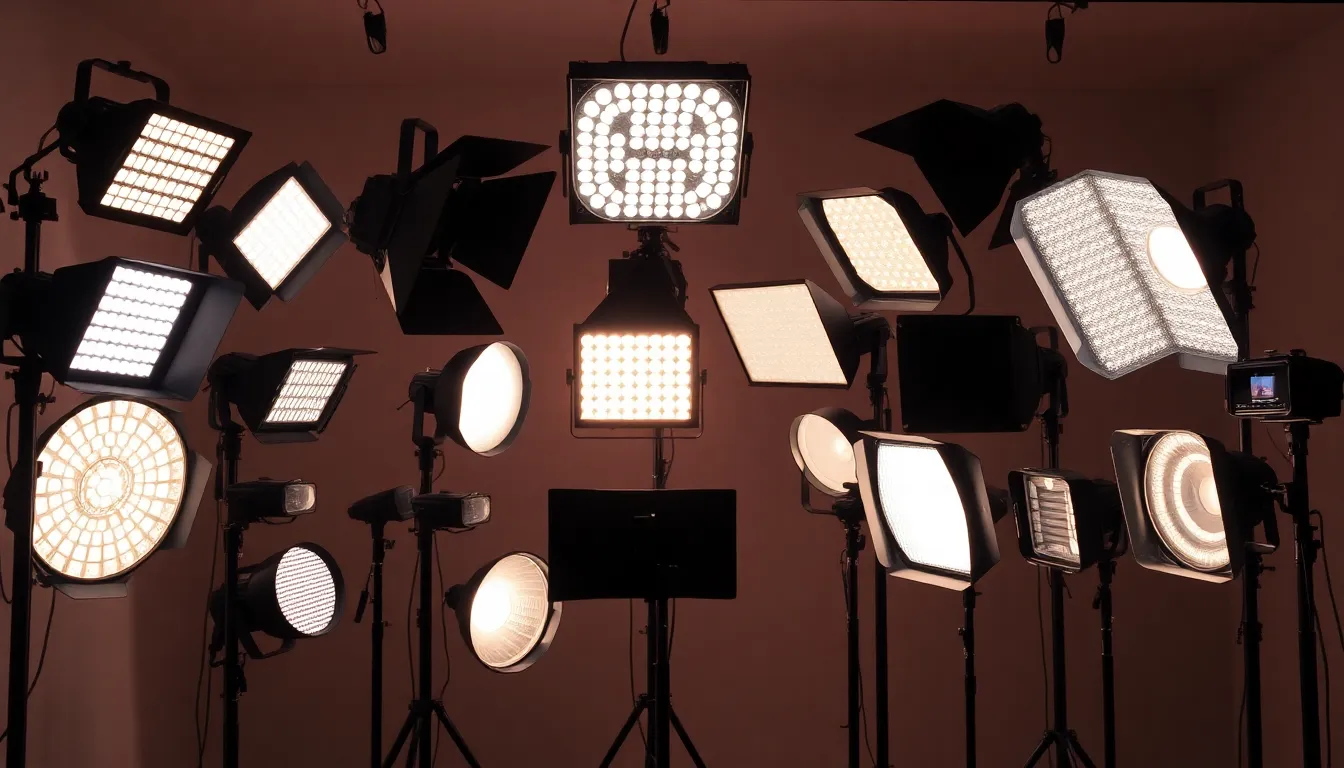
Professional lighting encompasses various types, each serving unique purposes in enhancing spaces. Understanding these categories helps one select the right lighting for specific applications.
LED Lighting
LED lighting operates efficiently, using significantly less energy than traditional options. Lifespans often exceed 25,000 hours, making them a lasting choice. Dimmability allows for tailored mood settings, adapting to diverse environments. Color temperature ranges enhance versatility, with options from warm to cool. In addition, LED fixtures come in numerous styles, fitting seamlessly into any design scheme.
HMI Lighting
HMI lighting delivers a powerful output, ideal for professional film and photography settings. They generate daylight-balanced light, providing consistency across various scenes. High color rendering index values ensure accurate color reproduction, essential for visual storytelling. HMI lamps tend to be lightweight, making them easily portable for on-location shoots. When working with these fixtures, preparation for heat generated during operation is crucial.
Tungsten Lighting
Tungsten lighting boasts a warm color temperature, creating inviting atmospheres. These lights typically operate at 3200K, making them popular in theatrical productions and film. The soft glow produced enhances skin tones, making it preferable for portrait work. Tungsten bulbs are readily available in various wattages, providing flexibility for different setups. Heat management is important, as these fixtures can become quite hot during extended use.
Applications of Professional Lighting
Professional lighting finds extensive use across various industries. Its applications significantly impact aesthetic appeal and functionality.
Film and Television
Professional lighting creates specific moods and enhances storytelling in film and television. Techniques like three-point lighting provide depth, defining characters through shadows and highlights. HMI lights often dominate outdoor shoots, delivering powerful illumination even in daylight. Meanwhile, LED fixtures gain popularity for their versatility, offering dimmable control and varied color temperatures. The right lighting supports cinematography, guiding viewers’ emotions and focuses.
Photography
In photography, professional lighting plays a critical role in capturing high-quality images. Softboxes provide gentle illumination, reducing harsh shadows on subjects. Ring lights create even lighting that enhances facial features for portrait photography. Using reflectors, photographers can manipulate natural light to achieve desired effects. Key lighting techniques such as Rembrandt and butterfly add drama and dimension to photos. Proper lighting choices elevate an image, ensuring compelling visuals.
Stage and Event Lighting
Stage and event lighting transforms venues, creating engaging atmospheres that elevate experiences. Intelligent lights offer dynamic options, allowing for color changes and movement to match performances. Spotlights highlight key speakers or performers, drawing attention while ambient lighting sets the overall mood. LED strips enable creativity in decor, outlining stages and paths. Properly orchestrated lighting enhances visual storytelling, making events memorable and immersive for attendees.
Benefits of Using Professional Lighting
Professional lighting significantly enhances the aesthetic quality of a space. It creates an inviting atmosphere, encouraging comfort and engagement. Artistic effects emerge from the interplay of light and shadow, adding a cinematic quality to environments.
Energy efficiency, particularly through LED technology, plays a vital role in lighting design. LED fixtures consume less energy and offer extended lifespans compared to traditional bulbs. Flexibility in color temperatures and dimming capabilities allows for tailored lighting solutions.
Lighting categories serve specific functions to improve both aesthetics and usability. Ambient lighting establishes the general illumination of a room. Task lighting focuses on specific activities, such as reading or cooking. Accent lighting draws attention to particular features, like artwork or architectural elements.
Applications of professional lighting extend across varied industries. Film and television production relies on precise lighting techniques to set moods and convey narratives. HMI lighting frequently illuminates outdoor shoots, providing powerful output alongside accurate color reproduction.
Photography benefits greatly from specialized lighting tools. Softboxes and ring lights enhance subjects, producing flattering images by minimizing harsh shadows. Event venues transform with the use of intelligent lights and spotlights, creating memorable experiences through engaging visual displays.
Enhanced safety often accompanies professional lighting in workspaces. Effective task lighting reduces accidents by providing adequate visibility. Thoughtful placement of fixtures ensures balanced illumination across all areas, fostering productivity.
Overall, professional lighting consistently elevates environments, enhances functionality, and promotes creativity through strategic design and execution.
Professional lighting is more than just illumination; it’s a transformative element that shapes experiences and environments. With the right techniques and fixtures, spaces can be dramatically altered to evoke emotions and enhance functionality.
From creating cinematic atmospheres in film to ensuring safety in workspaces, the applications of professional lighting are vast and impactful. Embracing energy-efficient solutions like LED technology not only benefits design but also promotes sustainability.
Investing in professional lighting is a step toward elevating any space, whether for personal enjoyment or professional use. Thoughtful lighting design can truly make all the difference.


