Table of Contents
ToggleCanless recessed lighting has quietly revolutionized how homeowners approach ceiling illumination. Unlike traditional recessed fixtures that require a separate housing can, 6-inch canless recessed lights mount directly to the drywall or ceiling structure, making them easier to install and more versatile for retrofits and new construction alike. Whether you’re brightening a kitchen, updating a bathroom, or adding ambient light to a living room, understanding what these fixtures offer, and how to choose them, can transform your space while saving time and money. This guide walks you through everything you need to know about 6-inch canless recessed lighting, from the basics to installation and design strategy.
Key Takeaways
- 6-inch canless recessed lighting mounts directly to ceilings without traditional housing cans, requiring only 2–4 inches of depth compared to 6–8 inches for standard recessed fixtures, making them ideal for retrofits and tight spaces.
- Canless recessed lights simplify installation with integrated LED modules and fewer fastening points, reducing labor time to 15–20 minutes per fixture and making DIY projects more manageable.
- LED-integrated 6-inch canless fixtures consume 8–12 watts and last 25,000–50,000 hours, delivering annual savings of $25–$35 per fixture and $150–$250 across a 20-fixture home retrofit.
- Space canless recessed lights 4–6 feet apart for optimal general illumination, position them 18 inches to 2 feet from cabinets in kitchens, and use warm 2700K color temperature in bedrooms for cozy ambiance.
- Verify local electrical codes, thermal ratings, and insulation contact clearance requirements before installation to ensure safety and compliance, particularly when adding new circuits or working in finished ceilings.
What Are Canless Recessed Lights and Why Choose Them?
Canless recessed lights, also called directional or surface-mounted recessed fixtures, skip the traditional recessed can entirely. Instead, they feature an integrated trim ring, housing, and light source built as one compact unit. The 6-inch size refers to the diameter of the trim ring opening, a standard residential measurement that strikes a balance between visibility and ceiling impact.
The shift away from cans happened largely because LED technology eliminated the heat-dissipation concerns that made deep cans necessary. A canless fixture is significantly shallower, which means you need less ceiling cavity depth. This matters enormously if you’re working in an older home with shallow joists, a finished ceiling, or tight mechanical systems overhead.
Canless recessed lights also simplify installation. You’re not threading wiring through separate components or dealing with springs and brackets that take forever to align. The fixture itself does the job, reducing the margin for error and the number of connection points that could fail. For DIYers, this translates to fewer headaches and faster completion times.
Key Advantages of 6-Inch Canless Recessed Fixtures
Ease of Installation tops the list. Canless fixtures mount with a handful of fasteners or clips rather than the ductwork-like assembly of traditional cans. If you’re retrofitting an existing ceiling, you’re cutting one hole instead of wrestling with bulky housing.
Shallow Depth is a game-changer for tight spaces. Most canless models sit 2–4 inches back from the ceiling surface, compared to 6–8 inches for standard recessed cans. Crawl spaces, cathedral ceilings, and dropped soffits suddenly become viable.
Modern Aesthetics matter too. Canless fixtures offer a sleeker, more contemporary look with trim rings in various finishes, brushed nickel, matte black, and white are common. No awkward gaps or mismatched proportions.
LED Integration in canless fixtures is near-universal. Most come with integrated or pre-wired LED modules, eliminating the need to source and swap bulbs later. Many are dimmable and available in multiple color temperatures, from warm 2700K to bright 5000K, giving you precise control over ambiance.
Thermal Management is handled within the fixture design, so you don’t need the massive ventilation clearance that traditional cans demand. That said, always check the manufacturer’s spacing requirements from insulation, typically 3 inches minimum.
Finally, cost efficiency over time is undeniable. LED-integrated canless lights draw 8–12 watts per fixture and last 25,000–50,000 hours. Traditional incandescent recessed fixtures consumed 65 watts and needed regular replacement. The upfront savings on installation labor combined with years of reduced electricity use make the math compelling.
Installation Basics and What You Need to Know
Installation difficulty depends on whether you’re retrofitting or building new. Retrofits in finished ceilings are trickier than new construction, where you can work from above the joists.
For new construction or accessible attics: Cut the hole (typically 6.5 inches for a 6-inch fixture), run electrical to the junction box, and secure the fixture with brackets. Most installs take 15–20 minutes per fixture once you’re comfortable with the process.
For finished ceilings: Use a drywall saw or oscillating multi-tool to carefully cut the opening from below. This requires a steady hand and patience, the hole needs to be accurate or the trim ring won’t sit flush. Some canless fixtures include adjustable brackets to handle minor drywall thickness variations, which is helpful.
Electrical work depends on local code. If you’re tapping into existing circuits, verify load calculations: a typical 15-amp circuit can handle 10–12 LED recessed lights without issue, but this varies by jurisdiction. If you’re unsure, hire a licensed electrician. Many areas require a permit for ceiling electrical work, particularly if you’re adding new circuits.
Always check the fixture’s thermal rating and confirm it’s suitable for your ceiling type. Some fixtures are rated for insulation contact: others aren’t. Overheating is rare with LEDs, but violating clearance requirements can trip breakers or pose a fire hazard.
Tools and Materials Required
Tools:
• Drywall saw or oscillating multi-tool (for retrofits)
• Drill or impact driver (for fastening)
• Voltage tester (to confirm power is off)
• Level (optional, but helpful for alignment)
• Wire connectors and electrical tape
Materials:
• 6-inch canless recessed LED fixtures (quantity as needed)
• 14 or 12 AWG electrical wire (depending on circuit amperage)
• Wire connectors (appropriate gauge)
• Drywall patching material (if replacing old fixtures)
• Trim rings and bezels (if not included with fixture)
Product-wise, look for fixtures from reputable makers that offer IC-rated (insulation contact) options if applicable, adjustable trim rings for sloped or uneven ceilings, and 5-year minimum warranties. Avoid ultra-cheap knockoffs that lack thermal management or dimming compatibility.
Lighting Design Tips for Your Space
Spacing and placement make the difference between a well-lit room and one that’s either too bright or has awkward shadows. A common rule is to space recessed lights 4–6 feet apart for general illumination, but this depends on ceiling height and desired brightness.
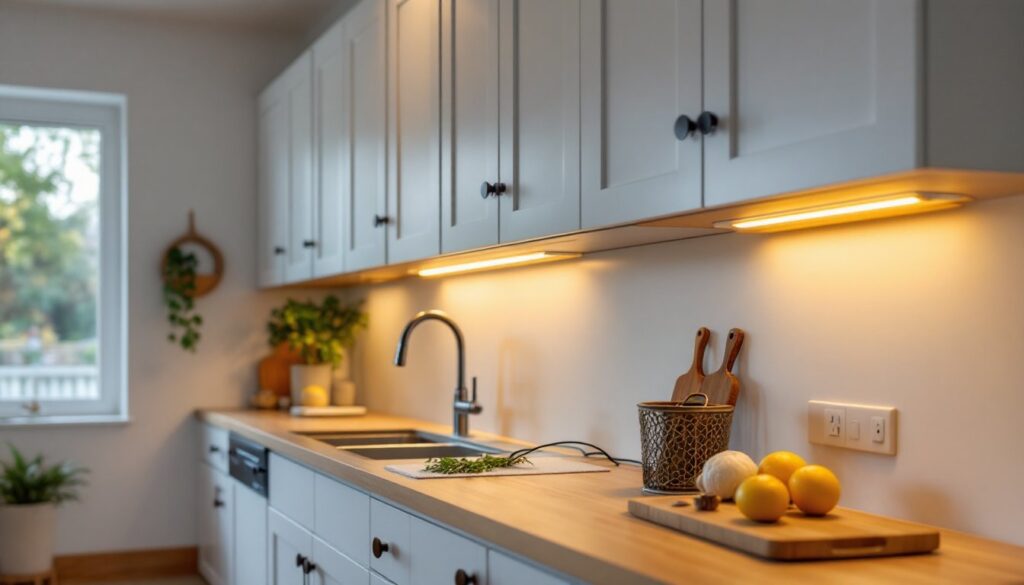
For kitchens: Aim for roughly one 60-watt-equivalent LED (about 800 lumens) per 25 square feet of work surface. Position fixtures 18 inches to 2 feet from cabinets or walls to avoid hot spots directly above seating areas. Task lighting under cabinets pairs well with recessed general lighting.
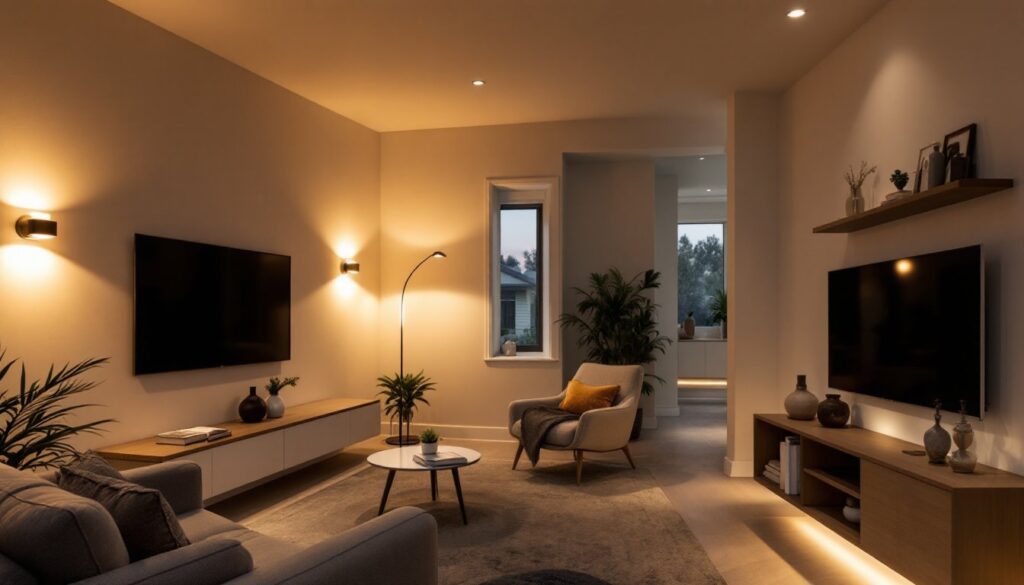
For living rooms or bedrooms: One fixture per 50 square feet is reasonable for ambient light, but consider layering with other sources, floor lamps, wall sconces, to avoid a flat, institutional feel. Dimming capability transforms recessed lights from fixed overhead to flexible ambiance.
For bathrooms: Mirror-adjacent recessed lights help with shaving and makeup, but avoid placing them directly above mirrors where they’ll create shadows on faces. A 6-inch fixture works well in smaller bathrooms: larger bathrooms may benefit from a few fixtures spaced 4 feet apart.
Color temperature matters psychologically. 2700K (warm white) feels cozy and is ideal for bedrooms and dining areas. 3000K–4000K (neutral white) works for kitchens and living spaces. 5000K (daylight) is useful for detailed work but feels clinical in living areas.
When planning layout, sketch the ceiling on graph paper and mark fixture locations, joists, and existing electrical boxes. This prevents surprises mid-project and helps you estimate wire runs. Many installers place fixtures in a grid pattern for symmetry, but staggered or asymmetrical layouts can feel more intentional in open-plan spaces.
Energy Efficiency and Cost Savings
Switching to canless LED recessed lighting delivers measurable savings. An LED canless fixture draws roughly 10 watts compared to 65 watts for an incandescent recessed light. Over a typical year (assuming 3 hours daily use), a single fixture saves about 200 kilowatt-hours, roughly $25–$35 annually depending on your local electricity rate.
Multiply that across a whole-house retrofit. Replacing 20 incandescent recessed fixtures with LED canless equivalents saves 1,100 kilowatt-hours yearly, potentially $150–$250 in annual electricity costs alone. Add in the fact that LEDs last 25,000–50,000 hours (10–20 years of typical use) versus 1,000 hours for incandescent, and you’re eliminating the hassle and cost of frequent replacements.
Many utility companies offer rebates for LED lighting upgrades, particularly in older homes. Check your local provider’s incentive programs before purchasing: rebates can cover 20–50% of fixture and labor costs.
Canless fixtures’ efficiency also stems from their design. No internal air gaps or heat dissipation losses like traditional cans. The light travels more directly to the room, wasting less energy as heat. Dimmable models let you further reduce consumption during daytime hours or when full brightness isn’t needed.
Thermal benefits are secondary but real. Because canless fixtures run cool, you’re not adding heat to your ceiling cavity in summer, which can reduce air-conditioning load. In winter, the minimal heat emission means less interaction with insulation and HVAC systems.
One note: buyer beware of suspiciously cheap fixtures claiming extreme efficiency. Reputable manufacturers publish lumen output and color rendering index (CRI) specifications. CRI above 90 ensures colors look natural: lumen figures let you compare brightness apples-to-apples. A 6-inch canless LED typically produces 600–900 lumens depending on wattage and design.
Conclusion
6-inch canless recessed lighting represents a genuine upgrade in residential illumination, easier to install, more versatile for tight spaces, and far more efficient than traditional fixtures. Whether you’re starting fresh in a new build or retrofitting a finished ceiling, the learning curve is manageable and the payoff substantial. Thoughtful placement, proper electrical work, and attention to local code requirements ensure a safe, professional result. With LED longevity and dimming flexibility, your investment pays dividends for years to come.