Table of Contents
ToggleOutdoor lighting transforms a yard from an afterthought into a functional and inviting extension of your home. But choosing the right fixtures and understanding installation doesn’t have to be complicated. LED outdoor lighting has become the standard for good reason, it’s energy-efficient, durable, and available in more styles and configurations than ever before. Whether you’re lighting a deck, path, or garden beds, LEDs deliver better performance and lower electricity bills than older halogen or incandescent options. This guide walks you through selecting, installing, and maintaining LED outdoor lights so your yard works hard from dusk until bedtime.
Key Takeaways
- LED for outdoor lighting consumes 75% less energy than incandescent bulbs and 50% less than halogen, resulting in significantly lower electricity bills over time.
- Quality LED outdoor fixtures last 25,000 to 50,000 hours—roughly 10 to 20 years of nightly use—reducing replacement frequency and maintenance costs compared to older lighting technologies.
- Choose path and deck lights with a lux rating between 100 and 300 for optimal safety and visibility, and ensure fixtures have at least an IP65 rating to withstand moisture and dust.
- Hardwired LED outdoor lighting systems typically use 12-volt low-voltage transformers (safer for DIY installation) connected to an outdoor GFCI outlet, while solar and battery-powered fixtures offer plug-and-play convenience without wiring.
- Seasonal maintenance—including cleaning lenses, inspecting seals for water intrusion, and checking connectors for corrosion—extends the lifespan of your LED outdoor lighting system and prevents performance degradation.
Why LED Lighting Is the Best Choice for Outdoor Spaces
LED outdoor lighting has earned its place as the go-to choice for homeowners, not because it’s trendy, but because it outperforms older technologies in nearly every practical way.
First, energy consumption is night and day different. LEDs use about 75% less electricity than incandescent bulbs and 50% less than halogen fixtures, which means lower utility bills month after month. A typical outdoor LED string light or landscape fixture might draw 5–10 watts, while an old-school halogen equivalent could demand 50–100 watts. Over a season, that adds up fast.
Second, lifespan matters on the pocketbook. Most quality LED outdoor fixtures last 25,000 to 50,000 hours, roughly 10 to 20 years of nightly use. Incandescent and halogen bulbs burn out in a fraction of that time, leaving you on a ladder in the dark more often than you’d like. That durability also means fewer trips to the hardware store.
Third, LEDs generate minimal heat, which is a safety win and a bug deterrent. Unlike halogen, which gets searingly hot to the touch, LED fixtures stay cool even after hours of operation. That lower heat output also attracts fewer insects, so you’re not hosting a mosquito convention on your patio.
Finally, LEDs come in a wide range of color temperatures. Warm white (2700K–3000K) mimics traditional incandescent and suits intimate seating areas. Cool white (4000K–5000K) works well for task lighting like driveways or deck surfaces where you need visibility. Recent smart home technology news shows that even budget-friendly LED fixtures now offer dimming, color-changing, and app-controlled features once reserved for premium products.
Types of LED Outdoor Lights for Every Area of Your Property
Before you buy, match the fixture type to its job. The wrong light in the wrong spot creates shadows, washes out color, or leaves dark patches where you need visibility.
Path And Deck Lights
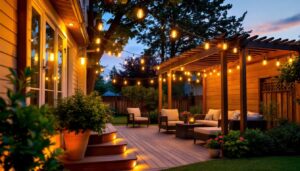
Path lights and deck lights serve two purposes: safety and ambiance. Path lights, typically 6 to 12 inches tall with a narrow beam, line walkways, garden beds, and front entries so people don’t trip in the dark. Deck lights sit flush or low-profile along railings and steps, bathing the walking surface in soft illumination.
For path lights, choose fixtures with a lux rating between 100 and 300, which is bright enough to see uneven ground without glare. Solar-powered path lights are budget-friendly and require no wiring, though they’re less reliable in cloudy climates or deep shade. Hardwired or battery-powered LED path lights give more consistent brightness and control.
Deck rail and stair lights come in post-cap, clip-on, and recessed styles. Post-caps sit atop wooden 4×4 or 6×6 posts and are the easiest retrofit. Recessed deck lights require a drill hole during construction or renovation, but they integrate invisibly and create a cleaner look. Make sure any fixture you choose has a minimum IP65 rating, meaning it’s dust-tight and protected against water jets, essential for a piece of wood that gets rained on.
Landscape And Accent Lighting
Landscape and accent lighting adds depth and drama to your yard. These fixtures highlight trees, shrubs, water features, or architectural details, creating layers of light rather than one flat, bright yard.
Spotlights and uplights are the workhorses here. An uplight sits at ground level and points upward, silhouetting trees or walls. A spotlight mounts higher and shines down or across, accentuating a focal point. For trees, position spotlights 6–10 feet away from the trunk and angle them to graze the foliage, this creates shadow and depth instead of floodlighting the whole yard into harshness.
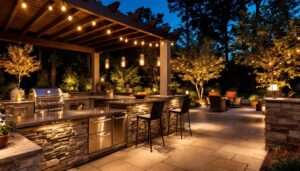
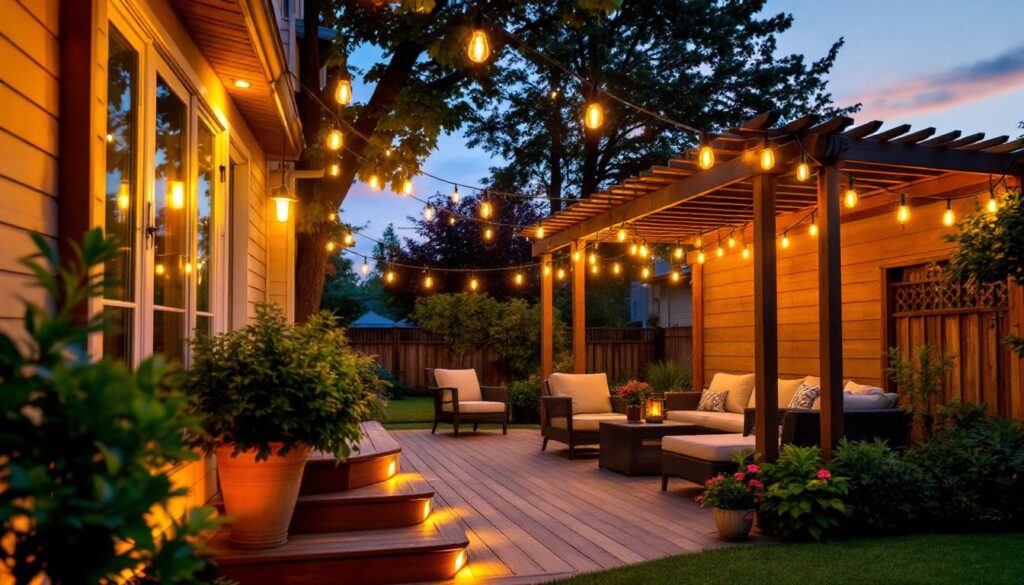
String lights and bistro fixtures suit intimate seating zones. LED Edison-style bulbs mimic vintage filament warmth without the inefficiency. Modern outdoor LED string lights rated IP44 or IP65 withstand rain and are safe to drape overhead or along railings.
Wash lights, which cast a broad, even glow, work well for fences, garden walls, or patios. They’re softer than spotlights and create a cohesive backlit effect. When choosing wash lights or uplights, look for a beam angle between 30 and 60 degrees for focused accent work, or 60 to 120 degrees for broader coverage. Many top outdoor smart lights reviewed in 2025 use warm white and adjustable color options to let you adapt the mood for entertaining or quiet evenings.
How To Install LED Outdoor Lighting: A Practical DIY Approach
Installation depends on whether you’re choosing solar/battery fixtures (plug-and-play) or hardwired systems (requires a little more planning).
Solar and Battery-Powered Fixtures:
These require no wiring and are forgiving of mistakes. Simply push the stake into the ground, ensure the solar panel faces south or southwest, and let it charge during the day. Battery-powered fixtures work anywhere and last on a single charge, though you’ll change batteries seasonally. Ground conditions matter, hard or rocky soil is tough to stake into, so pre-drill a small guide hole if needed.
Hardwired LED Fixtures:
Hardwired outdoor lighting gives consistent brightness and eliminates battery maintenance. You’ll run low-voltage or line-voltage cable (typically 12-volt or 120-volt, depending on fixture type) from a transformer or breaker to each light.
-
Plan the circuit. Sketch your yard, mark light locations, measure the total cable run, and calculate the load (total wattage of all fixtures). Most hardwired outdoor systems use 12-volt low-voltage transformer systems rated for 300–1000 watts total. These are safer than line-voltage systems and safer for DIY installation.
-
Run the cable. Lay out the cable path before burying or attaching it. Use outdoor-rated, UV-resistant cable (typically 10-gauge or 12-gauge for 12-volt runs). Pin it along deck railings, trenches, or conduit. If burying cable, use a shallow trench or lay it along the surface under mulch or landscape edging: burial under 6 inches usually requires conduit and permits in many jurisdictions, so check your local IRC (International Residential Code) requirements.
-
Connect fixtures. Most 12-volt LED fixtures use push-fit connectors, no stripping wire required. Align the connector tabs, push firmly until it clicks, and test before burying or concealing the cable.
-
Install the transformer. Place it near an outdoor GFCI outlet, out of standing water and direct splash. A GFCI (ground fault circuit interrupter) outlet is non-negotiable for any outdoor electrical work, it’s required by code and protects you if there’s a short or water contact.
-
Test everything. Turn on the system during daylight and walk the perimeter. Check for dark spots, glare, and balanced coverage. Adjust fixture angles or add lights where needed before final setup.
For complex wiring, multiple circuits, or line-voltage (120-volt) systems, hire a licensed electrician. Outdoor line-voltage work requires permits, conduit, proper grounding, and knowledge of local codes, not a casual DIY task. Step-by-step DIY tutorials on platforms like Instructables can walk you through specific fixture types, but always defer to a professional if you’re uncertain about electrical safety.
Essential Maintenance And Longevity Tips For Outdoor LED Systems
LED fixtures are tough, but outdoor conditions, salt spray, moisture, temperature swings, and UV exposure, take a toll over time.
Cleaning and Debris:
Dust, pollen, and debris accumulate on lens covers and reduce light output. Once a season, wipe fixtures with a soft, dry cloth or rinse gently with a hose. Avoid high-pressure washers, which can force water into seals. For stubborn grime, a mild soap and soft brush work fine: dry thoroughly to prevent mineral buildup.
Check Seals and Gaskets:
Look for signs of water intrusion, corrosion, condensation inside the lens, or dimming. If a seal fails, the fixture may be repairable (some manufacturers sell replacement gaskets), but it’s often cheaper to replace the unit than attempt a repair. Buy fixtures with silicone or EPDM rubber gaskets, which hold up better than cheaper foam seals.
Seasonal Care:
Before winter or heavy storm seasons, inspect cable runs for damage or exposed sections. Secure loose cable with stainless steel clips to prevent tripping hazards. In areas prone to freezing, let systems run periodically to ensure condensation doesn’t trap inside fixtures.
Wire and Connector Checks:
Once a year, visually inspect exposed cable for cuts, abrasion, or UV degradation. Replace any damaged sections immediately, exposed wiring is a shock hazard and code violation. Connectors should be tight and corrosion-free. A corroded connector can cause intermittent dimming or failure: clean it with a pencil eraser or fine abrasive and re-seat firmly.
Upgrade or Replace Strategically:
When a fixture fails, modern LED replacements are drop-in compatible with most older outdoor systems. Bulk replacements every 10–15 years keep your yard looking cohesive and take advantage of newer efficiency and feature improvements. If you’re adding lights, consider expanding the transformer capacity or running a second low-voltage circuit rather than overloading an existing one.
Conclusion
LED outdoor lighting is an investment that pays dividends in safety, curb appeal, and utility bills. Whether you start with a few solar path lights or plan a whole-yard hardwired system, the fundamentals stay the same: match the fixture to its purpose, install it correctly, and maintain it seasonally. With modern LED options ranging from budget-friendly to fully smart-enabled, there’s a solution for every yard and skill level. Take your time with planning, don’t skip the prep work, and your outdoor spaces will shine for years to come.