Table of Contents
ToggleLinear pendant lighting has become the go-to choice for homeowners looking to add both function and modern style to kitchens, dining rooms, and living spaces. Unlike traditional single-pendant fixtures, linear options stretch across countertops or island seating, creating a cohesive, designer-approved look without the “decorated” feeling of overstated decor. The appeal is straightforward: they provide even task lighting, anchor a space visually, and work with almost any design direction. Whether you’re updating an existing kitchen or planning a renovation, understanding how linear pendants fit into your space, and how to install them properly, makes the difference between a project that looks professional and one that feels off.
Key Takeaways
- Linear pendant lighting provides even task lighting and visual balance by distributing light across countertops or islands, making it more effective than single pendant fixtures.
- Proper hanging height of 30–36 inches above counter with fixtures spaced 18–24 inches apart on center ensures both functionality and professional appearance.
- Linear pendant fixtures must be mounted to solid ceiling framing (joists with structural backing) and require a dedicated electrical circuit installed by a licensed electrician for safety and code compliance.
- Design flexibility is a major advantage—the same rail system adapts to industrial, Scandinavian, farmhouse, or contemporary styles through shade material, color, and metal finishes.
- Budget ranges from under $300 for basic setups to $800+ for premium fixtures, but mid-range options ($300–$800) typically offer the best balance of durability, LED compatibility, and design-forward aesthetics.
- Centering the linear fixture on your island or counter and confirming level installation are non-negotiable details that prevent an unfinished or amateurish appearance.
What Is Linear Pendant Lighting and Why It Works
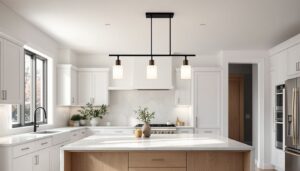
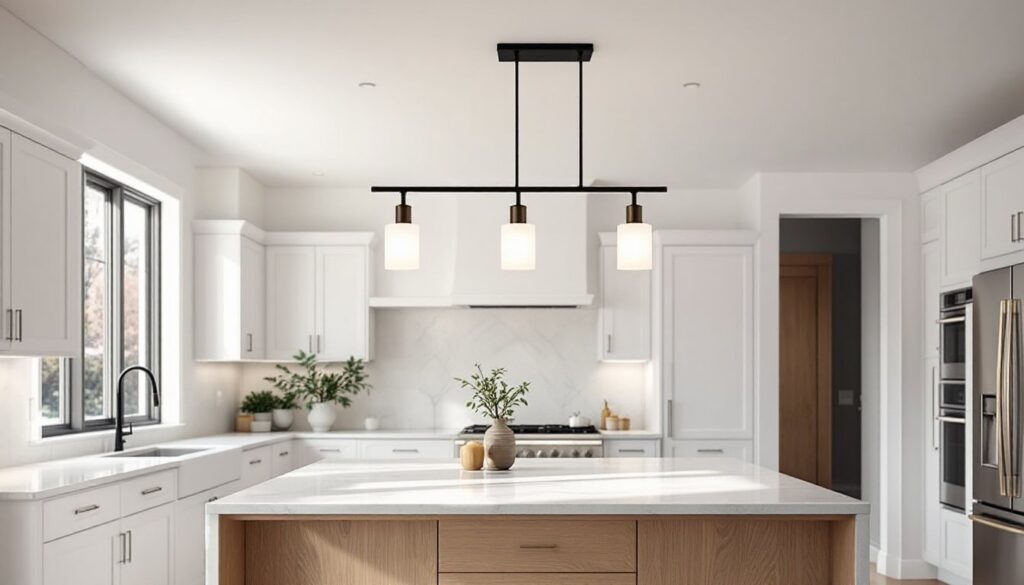
Linear pendant lighting consists of two or more pendant fixtures hung from a single horizontal rail, cable, or rod. The fixture arrangement can be evenly spaced or staggered, and the rail itself can run perpendicular to your island or span the length of a counter. The key advantage over single pendants is consistency: they distribute light more evenly across a long surface and create a visual line that anchors the space.
Why do designers and DIYers favor them? Task lighting over kitchen islands or dining tables becomes more effective with multiple fixtures rather than one struggling to illuminate a 5-foot counter. The visual weight feels balanced, three or four smaller pendants over an island look intentional rather than sparse. Modern linear configurations also hide the mounting rail, giving a clean, minimalist look that photographs well and works in contemporary, farmhouse, industrial, and transitional spaces alike.
From a practical standpoint, linear setups are more forgiving than single pendants. If one bulb fails, the space still has light. Spacing fixtures about 18 to 24 inches apart on center is a common rule: this keeps them proportional without crowding or creating dark gaps. You’ll also need to confirm your ceiling can handle the weight, most residential drywall or plaster combined with proper blocking and hardware supports standard fixtures, but a load-bearing check during planning prevents costly mistakes later.
Design Styles and Aesthetic Flexibility
One reason linear pendant lighting dominates modern home design is its flexibility. The same rail-and-shade system can shift from industrial (bare Edison bulbs, black metal) to Scandinavian (soft white, natural wood accents) to mid-century modern (cone-shaped brass shades, warm glass).
Shade material and shape drive the aesthetic. Frosted glass diffuses light evenly and suits contemporary spaces: clear glass with exposed filament bulbs reads industrial or vintage: fabric or linen shades soften the look and work in transitional homes: metal shades (aluminum, brass, or matte black) anchor industrial, farmhouse, or modern designs. Design inspiration platforms like Design Milk regularly feature linear setups as centerpieces in room reveals, showing how the same basic structure adapts across color palettes and material choices.
Length and scale matter too. A 3-foot linear fixture feels right over a 4-foot section of counter: a 5-foot rail suits a 6- to 8-foot island. Going undersized makes the space feel unfinished: oversizing crowds the visual field. Mixing metals is also fair game in modern design, brushed brass with black rod works, as does matte black with warm brass accents. The rule is consistency: if you’re mixing metals, repeat the combination elsewhere in the room (cabinet hardware, faucet, light switches) so it feels intentional, not accidental.
Choosing the Right Size and Configuration for Your Space
Measuring your island or counter is the first real step. Ideally, a linear fixture should be centered and not extend beyond the edges by more than 12 inches on either side. For a standard 3-foot-wide island, a 2.5-foot rail with 3 to 4 pendants works well. For islands 5 feet or longer, a 4- to 5-foot rail with 4 to 5 pendants maintains proportion.
Height matters equally. Pendant bottoms should hang 30 to 36 inches above counter height, that’s roughly the distance from a standard 36-inch counter to the bottom of a pendant shade. This puts them below sightline when seated and high enough that taller people won’t bump their heads. Over a dining table, drop pendants to 24 to 30 inches for a more intimate feel, checking that views across the table remain unobstructed.
Number of fixtures depends on spacing and rail length. A rule of thumb: start with 3 pendants for islands under 4 feet, 4 for islands 4 to 6 feet, and 5 or more for longer installations. Interior designers often use resources like MyDomaine to reference real room setups, which helps visualize the proportion before ordering. Bulb wattage and type (LED, incandescent, halogen) affect brightness: a 60-watt equivalent LED per shade usually suffices for task lighting. If you’re placing pendants over an eating surface, ensure the total lumens (brightness) is at least 75 to 100 per linear foot to avoid a dim, moody space when you need task light.
Installation Considerations and Best Practices
Before you order fixtures, confirm your electrical setup. Linear pendants need a power source: either an existing ceiling outlet above the island or a circuit run from a nearby wall outlet or switch. Many kitchens have an island circuit specifically for this: if yours doesn’t, hire a licensed electrician to run wiring and install a junction box or outlet where the fixture mounts. This isn’t a DIY electrical job, codes vary by jurisdiction (check your local National Electrical Code (NEC) section for residential kitchen requirements), and improper wiring is a safety and insurance liability.
Once power is confirmed, check ceiling framing. Linear fixtures mount to a ceiling box or rail anchor that must hit solid framing (typically a 2×4 or 2×6 joist at 16-inch centers). Use a stud finder to locate joists, and plan your hanging point to land on one or between two joists with a blocking brace installed between them. Drywall anchors alone won’t support hanging fixtures: you need structural backing.
Gather tools: drill with bits, screwdriver, wire strippers, needle-nose pliers, voltage tester, adjustable wrench, and a level. Most linear kits include mounting hardware, but double-check your fixture’s parts list against what arrives.
Placement and Lighting Layout Tips
Centering is non-negotiable. Measure the counter or island width, divide by two, and mark the centerline on the ceiling. Use a level to confirm your mounting points are plumb and straight. Crooked installation stands out immediately and can’t be unseen.
For islands, position the rail perpendicular to the seating side so pendants hang over the overhang where people sit. This lights their faces and plate, not the back of the island. Avoid placing pendants directly above the sink if one sits there: the fixture becomes a hazard and gets soaked.
Wiring runs should be hidden. If your power source is nearby, route the cable through the ceiling cavity between joists or within the fixture’s canopy (the mounting plate that covers the hole). If a long run is necessary, ask your electrician about the best path during the planning phase.
Listen for how the fixture sits. Some rails are rigid: others use cables and require tension adjustment. Read the manual thoroughly and test the hanging height with all shades installed before final trim work. Confirm the fixtures are level and that no shades sit lower or higher than their neighbors, uneven pendant lines look amateurish and suggest installation problems.
Budget-Friendly Options and Where to Shop
Linear pendant lighting ranges from $150 to $1,500+ per fixture, depending on shade material, rail length, finish, and brand. Budget-friendly options (under $300) from big-box retailers often use plastic or simple metal shades and basic wiring. These work fine for rental situations or temporary setups: expect shorter component lifespan and more frequent bulb replacements.
Mid-range fixtures ($300–$800) typically feature real glass or fabric shades, durable metal frames, and LED-ready sockets. This tier includes most designer-forward options from lighting showrooms and online retailers. Higher-end custom fixtures ($800+) offer handblown glass, artisanal finishes, or integrated smart dimming, great if budget allows, but not necessary for a functional, attractive installation.
Shop locally at lighting showrooms first: staff can explain lumens, color temperature (warm 2700K vs. cool 4000K), and how fixtures work in your ceiling height and layout. Online retailers offer broader selection and competitive pricing, though return policies vary. A well-stocked lighting store can transform your space with expert guidance and the ability to see samples in person.
Bulb type affects long-term cost. LED bulbs cost more upfront ($10–$20 per bulb) but last 25,000+ hours and draw minimal power. Incandescent equivalents are cheaper ($2–$5) but burn out yearly and waste energy. Over a 5-year period, LEDs save money and headaches. Also factor in whether your fixture requires special trims or canopies: proprietary parts add cost if replacements are needed later.
Conclusion
Linear pendant lighting transforms a functional kitchen or dining area into a cohesive, well-lit space that works as hard as it looks. The key is getting the basics right: proper height (30–36 inches above counter), centered placement, solid structural support, and a power source installed safely. Spend time choosing fixtures that match your aesthetic and confirm spacing feels balanced before you commit. Whether you opt for budget fixtures or invest in mid-range quality, the payoff in functionality and design is immediate, and lasts for years when installed properly.