Table of Contents
ToggleBathroom lighting is one of those projects that can transform your space, or completely derail it if you get it wrong. A poorly lit bathroom feels cramped and dingy, while the right fixtures make grooming easier, add visual depth, and even increase your home’s resale value. If you’re shopping at Lowe’s bathroom lighting section and feeling overwhelmed by vanity bars, sconces, and recessed cans, you’re not alone. This guide walks you through the fundamentals: understanding zones, choosing task-appropriate fixtures, and picking finishes that complement your style while handling moisture like a champ.
Key Takeaways
- Lowe’s bathroom lighting should be designed in three strategic layers—task lighting (60–80 lumens per sq. ft. at the vanity), ambient lighting (10–20 lumens per sq. ft. overall), and optional accent lighting for visual interest.
- Vanity lights must flank the mirror or mount directly above it to eliminate shadows; choose between single strips, dual-arm sconces, or above-mirror bars based on your bathroom size and style.
- Every bathroom light fixture requires UL 1598 (damp location) certification minimum, and wet location certification if installed within 5 feet of a tub or shower—this is non-negotiable for safety and durability.
- LED bulbs are the superior choice, lasting 15,000–50,000 hours while using 75% less energy than incandescent; select 3000K for warm spa-like lighting or 4000K for clinical brightness.
- Coordinate vanity light finishes (brushed nickel, oil-rubbed bronze, matte black) with your faucet and mirror frame to create a cohesive, polished look rather than a chaotic mismatch.
- Install recessed downlights 4–6 feet apart with a properly sized exhaust fan running 20 minutes after showers to prevent moisture buildup that corrodes fixtures and reduces their lifespan.
Understanding Bathroom Lighting Zones and Placement
Bathroom lighting isn’t one-size-fits-all. Think of it in layers: task lighting for grooming, ambient light for overall visibility, and accent lighting for visual interest. Most bathrooms benefit from all three, deployed in strategic zones.
Task lighting lives around the vanity mirror. This is where you shave, apply makeup, or check for that missed spot while brushing teeth. It needs to be bright and shadow-free, ideally between 60–80 lumens per square foot of mirror area.
Ambient lighting provides general brightness across the whole room. A single ceiling fixture works, but many designers now layer in recessed cans or a soffit light above the shower or tub area. Aim for 10–20 lumens per square foot across the room.
Accent lighting highlights architectural features, niches, or mirrors. It’s optional for smaller bathrooms but adds polish to larger ones.
Placement matters as much as wattage. Vanity lights should flank the mirror (left and right) or sit directly above it, never just on one side, or you’ll cast shadows. Recessed ceiling lights work best positioned 4 to 6 feet apart: spacing them closer than 4 feet can create an uneven wash. If your bathroom has a dedicated shower or soaking tub, add a separate overhead fixture there to avoid harsh glare when you’re relaxing.
Vanity and Task Lighting Essentials
Your vanity light is the workhorse of bathroom lighting. At Lowe’s, you’ll find three main styles: single strips, dual-arm sconces, and above-mirror bars.
Single strips mount horizontally above the mirror and house 3–5 bulbs. They’re budget-friendly and compact, making them ideal for powder rooms or small bathrooms. Look for dimmable LED options so you can adjust brightness from a soft 20% for nighttime visits to full brightness for morning grooming.
Dual-arm sconces flank the mirror on either side. This setup distributes light evenly across your face, reducing shadows under the eyes and cheekbones. Sconces are popular in 24-inch to 36-inch widths and work beautifully in traditional, transitional, and modern bathrooms. When shopping, verify that each arm houses enough lumens, typically 400–600 lumens per fixture, to avoid an undersized installation.
Above-mirror bars are gaining traction. These mount directly on the mirror frame or on the wall just above it. They’re sleek and modern, though installation requires drilling or adhesive backing (note: adhesive backing can fail over time in humid bathrooms: permanent mounting is more reliable).
When choosing your fixture, pick a color temperature of 3000K (warm white) for a flattering, spa-like feel, or 4000K (neutral white) if you prefer cool, clinical brightness for precise grooming. Avoid anything above 5000K in bathrooms, it can feel harsh. Also, ensure your fixture is rated UL 1598 (damp location) at minimum: if it’s within 5 feet of a tub or shower, it needs UL 1598 (wet location) certification.
Ambient Lighting for Overall Brightness
Ambient lighting sets the tone for your entire bathroom. A single overhead fixture centered on the ceiling is the baseline, but it often leaves corners dark and can create unwanted shadows. Recessed downlights are your best alternative. Typically 4-inch recessed cans spaced 4–6 feet apart deliver even, layered brightness without the theatrical “spotlight” feel of a single overhead.
For a 5×8-foot bathroom (standard size), four recessed cans running across the ceiling in a 2×2 grid works well. Each can should be dimmable and rated 65–75 watts equivalent LED (roughly 800–900 lumens each). This gives you flexibility: run them at full brightness for cleaning day, dim them to 50% for a relaxing soak.
Bathtub and shower areas often need dedicated overhead lighting to prevent dark zones. A single recessed can or waterproof surface-mount fixture above the tub does the job. Position it slightly toward the far end of the tub so light doesn’t glare directly into your eyes when you’re lying back.
Ceiling material matters. If you have drywall ceilings, recessed cans install easily. Drop ceilings accept pre-fabricated can housings. Sloped or cathedral ceilings need sloped-ceiling rated fixtures to prevent heat buildup. When shopping at Lowe’s bathroom lighting section, check the packaging label, it’ll specify if a can is IC-rated (insulation contact–safe) or non-IC, which affects whether you can place insulation around it. Your building code may require IC-rated fixtures: check your local IRC requirements.
Moisture-Resistant and Safety Features to Look For
Bathrooms are wet, steamy spaces. Moisture corrodes metal, fries wiring, and causes fixtures to fail or create safety hazards. This is non-negotiable: every light fixture in a bathroom must be rated for damp or wet locations.
Check the UL listing on the package. UL 1598 (damp location) means the fixture tolerates occasional moisture and humidity but isn’t meant to be sprayed directly. UL 1598 (wet location) means it can handle standing water or direct spray, required within 5 feet of a tub, shower, or sink. If a fixture doesn’t list either certification, don’t buy it for a bathroom, period.
Materials matter too. Stainless steel and aluminum resist rust better than chrome or bare steel. If you’re choosing a finish, consider brushed nickel or satin chrome over shiny chrome: they hide water spots and fingerprints. Plastic or resin fixtures are fine, but avoid cheap finishes that peel or discolor after a year or two.
Vent fans are your unsung ally. A properly sized exhaust fan (usually 80–100 CFM for a standard bathroom) removes humidity before it condenses on your fixtures. This dramatically extends the life of your lighting. Run it for 20 minutes after showers, or install a humidity sensor that kicks it on automatically.
GFI (ground fault interpreter) protection is required by code for outlets within 6 feet of a sink. If your bathroom light circuit shares a breaker with outlets, a GFI outlet upstream will protect both. Always verify your installation meets local electrical codes, this isn’t a guess-and-check area.
Popular Lighting Styles and Finishes at Lowe’s
Bathroom lighting styles break into a few recognizable camps. Modern/contemporary fixtures lean toward clean lines, geometric shapes, and industrial finishes like matte black or brushed gold. These pair well with floating vanities and minimalist tile. Transitional fixtures blend traditional shapes (think classic sconce arms) with updated materials and finishes. They’re forgiving and work with most décor. Traditional fixtures feature ornate details, crystal, or brass, ideal if your bathroom has vintage tile or clawfoot tubs.
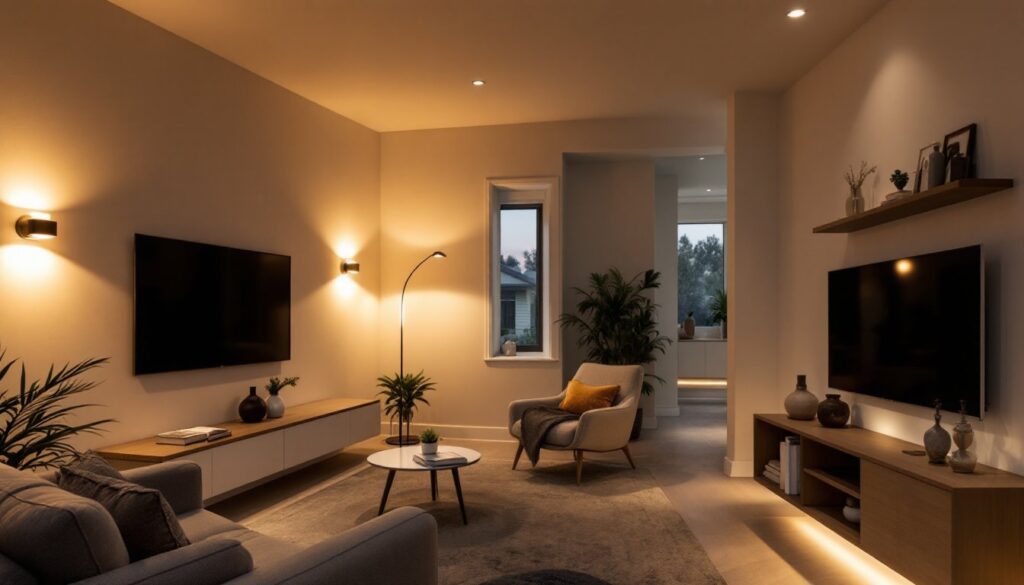
Vanity light finishes at Lowe’s typically run the gamut: polished chrome, brushed nickel, oil-rubbed bronze, satin brass, and matte black. Here’s a practical tip: your vanity light finish should coordinate with your faucet, towel bars, and mirror frame. If everything is a different finish, the space feels chaotic. Pick one or two primary finishes and stick to them. Also, living room lighting transforms spaces much like bathroom fixtures do, consistency in finish across your home creates visual flow.
Recessed can finishes matter less since most sit flush with the ceiling, but trim rings (the visible part) come in white, black, or nickel. Match these to your ceiling color or accent wall if you have one. You can also find design inspiration at lighting stores that curate coordinated fixture collections, which removes the guesswork.
For a cohesive look, design sites like Remodelista showcase bathroom remodels with matched fixture families. Many Lowe’s collections follow a similar principle, they offer vanity lights, recessed trim rings, and accent sconces in the same finish and design language, so you can buy them as a set.
Energy-Efficient and Smart Lighting Options
LED has become the default for bathroom lighting, and rightfully so. LED bulbs last 15,000–50,000 hours (roughly 15–20 years of daily use), use 75% less energy than incandescent, and generate minimal heat. In a humid bathroom, the lower heat output of LEDs also reduces stress on fixture components.
When shopping for LEDs at Lowe’s, look for lumens (brightness) rather than watts. A 60-watt equivalent LED delivers roughly 800 lumens and draws only 8–9 watts. Color temperature is listed in Kelvin (K). For bathrooms, stick to 3000K or 4000K. Anything above 5000K looks clinical: anything below 2700K is too warm for task lighting.
Dimmable LEDs are worth the small upcharge. Standard LEDs don’t always play well with old dimmer switches, so if you’re installing dimmers, buy LEDs explicitly rated “dimmable” and pair them with LED-compatible dimmers. This prevents flickering and extends bulb life.
Smart bathroom lights are emerging. Fixtures with built-in WiFi or Bluetooth let you control brightness and color temperature via app or voice command. Some even offer “circadian rhythm” modes that shift from cooler, alerting light in the morning to warmer tones at night. Brands like Philips Hue and LIFX make retrofit bulbs for existing sockets, but Lowe’s also stocks smart-capable vanity bars and recessed fixtures from manufacturers like HomeAdvisor-listed pros who work with smart home systems. If you’re building a smart home, investing in smart bathroom lighting is a logical move, though it adds $50–$150 per fixture compared to standard LEDs.
Cost-wise, an LED vanity light fixture runs $30–$150 at Lowe’s depending on finish and bulb count. Recessed cans are $15–$60 each. Switching from incandescent to LED recouped through energy savings typically takes 1–2 years, then you’re saving money.
Conclusion
Choosing the right bathroom lighting at Lowe’s comes down to three steps: understand your zones (task, ambient, accent), pick fixtures rated for moisture, and coordinate finishes for cohesion. Don’t skimp on vanity lighting, it’s the fixture you’ll use most, and a good one makes grooming genuinely easier. Layer in ambient recessed lights or a ceiling fixture, add an exhaust fan to manage humidity, and consider dimmable LEDs for flexibility. With these fundamentals in place, you’ll have a bathroom that’s both functional and inviting, the kind of space you actually enjoy spending time in.