Table of Contents
ToggleYour bedroom isn’t just a place to sleep, it’s a retreat. Yet most people rely on a single overhead fixture that turns the space into a surgical suite or a dark cave depending on the switch position. Modern bedroom lighting ideas have evolved beyond that binary choice. Today’s approach centers on layered lighting, which combines ambient, task, and accent sources to create zones you can adjust for morning energy, afternoon focus, or evening wind-down. Whether you’re planning a full renovation or a tactical upgrade, understanding how to layer your lights transforms both the function and feel of your sleep space.
Key Takeaways
- Modern bedroom lighting ideas rely on layered lighting with three independent sources—ambient, task, and accent—allowing you to adjust brightness for any time of day, from morning energy to evening wind-down.
- Statement ceiling fixtures should be low-profile and simple (like geometric flush mounts or linear suspension systems) with 1,000–2,000 lumens output for a standard bedroom, paired with a dimmer switch ($25–$50) for flexible brightness control.
- LED strip lights tucked behind headboards or cove molding ($20–$60 per roll) create hotel-like ambiance without direct glare, and should use warm white (2700K–3000K) tones for evening relaxation.
- Smart bulbs (Philips Hue, LIFX, Wyze) in bedside lamps enable circadian-rhythm-friendly automation, including dimmed 10-percent amber light before sleep and gradual sunrise simulation upon waking.
- Bedside lamps should sit 24–28 inches tall for eye-level positioning when reading, while wall-mounted swing-arm sconces offer minimalist alternatives and should be installed 60 inches from the floor on either side of your headboard.
- Warm white bulbs (2700K) are essential for bedside lighting to avoid suppressing melatonin, while always choosing dimmable-rated LEDs to prevent flickering or humming when dimmed.
Layered Lighting: The Foundation of Modern Bedroom Design
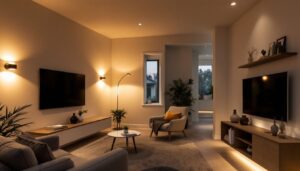
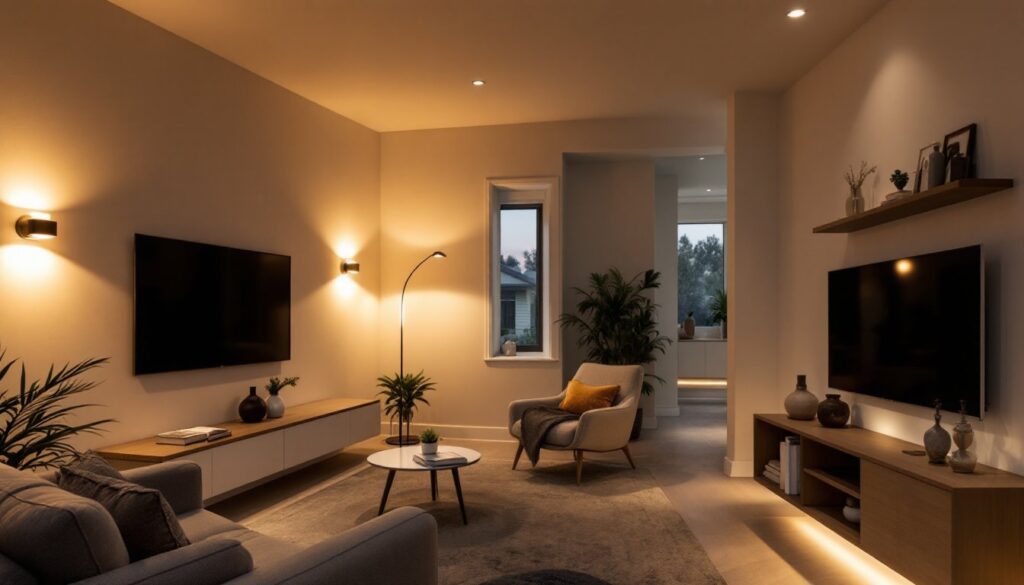
Layered lighting works like a dimmer for your entire day. The three-layer framework is ambient (overall room brightness), task (focused light for reading or dressing), and accent (mood or highlight layers). A bedroom that relies only on overhead lighting leaves you fumbling in the dark or squinting at harsh shadows. Start by planning zones: ambient light from a ceiling fixture or recessed cans, task light at the bedside or vanity, and accent strips or wall sconces to add depth.
Most modern bedrooms need two to three distinct light sources to hit all three categories. An overhead fixture handles ambient light, though increasingly, designers skip the central ceiling pop and instead use recessed downlights or low-profile flushmounts to keep sightlines clean. Bedside lamps address task needs (reading, winding down), while hidden LED strips or picture lights layer in visual interest. The beauty of this approach: each layer can be dimmed or switched independently. You’re not stuck with “bright” or “off.” Your bedroom’s lighting now matches your mood, not the other way around.
Statement Ceiling Fixtures That Make an Impact
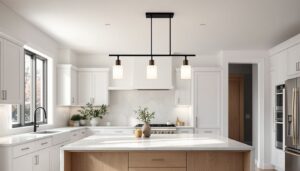
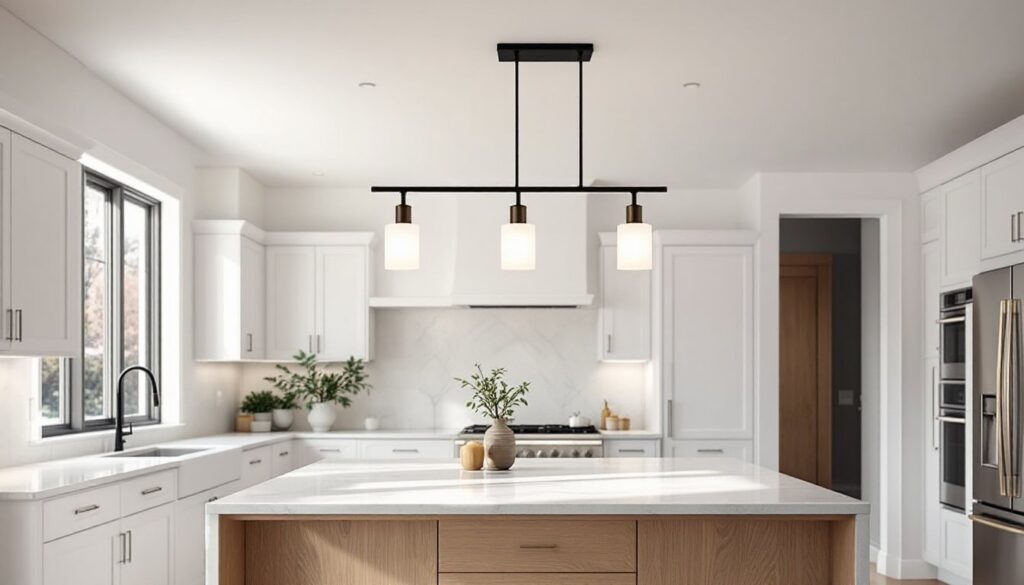
A statement ceiling fixture doesn’t have to mean a crystal chandelier. In 2026, modern bedroom ceilings favor clean-lined pendants, geometric flush mounts, or linear suspension systems that anchor the room visually without overwhelming it. Look for low-profile fixtures that sit close to the ceiling, most bedrooms have 8-foot ceilings, and a fixture that hangs 18 inches down eats visual space.
Popular modern styles include slatted wooden spheres, minimalist drum shapes with linen shades, and brushed metal cylinders. Avoid anything ornate: modern design leans toward simplicity. When selecting a fixture, check the lumen output, aim for 1,000 to 2,000 lumens for a 12×14-foot bedroom to ensure the fixture alone provides adequate ambient light without being harsh. Pair it with a dimmer switch (a standard lutron or GE Enbrighten dimmer runs $25–$50) so you can drop the brightness to 40 percent for evening. Installation requires turning off power at the breaker, removing the old fixture, and connecting live (hot), neutral, and ground wires. If you’re uncomfortable with basic wiring, a licensed electrician takes an hour and costs $150–$250 per fixture.
Accent Lighting With Ambient Control
LED Strip Lights and Cove Lighting
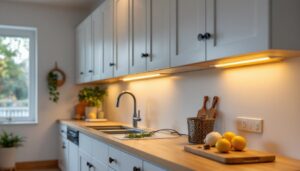
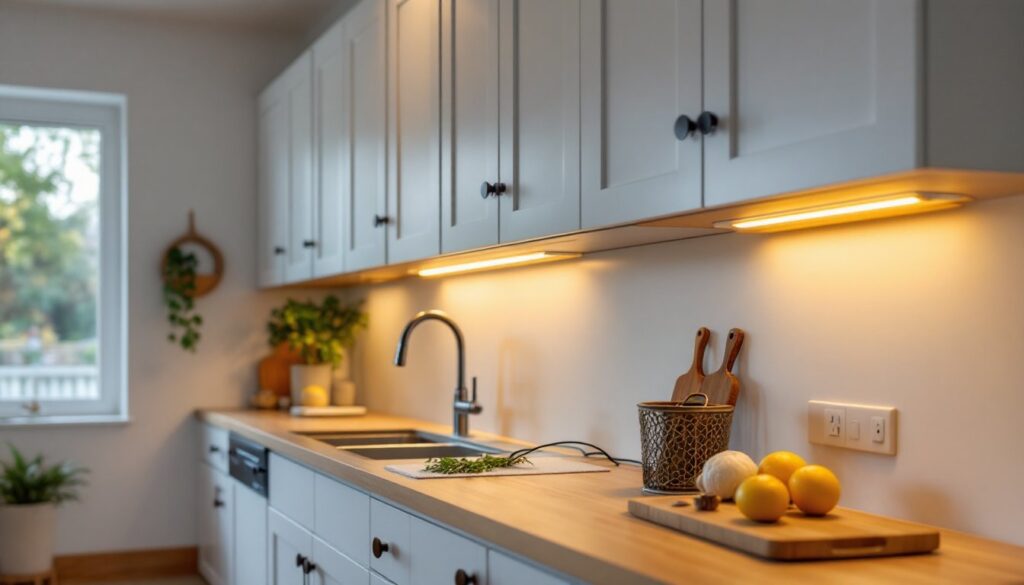
LED strips tucked into cove molding or floating shelves create a hotel-like ambiance without the formal rigidity. Flexible adhesive-backed LED strips ($20–$60 per 16-foot roll) are DIY-friendly: clean the surface, peel and stick, and plug into a power supply. For a built-in look, route a 2-inch aluminum channel (available at hardware stores for $3–$8 per foot) along the top of your headboard or at the wall–ceiling junction, then insert the LED strip inside so light diffuses evenly downward.
These strips work best behind furniture or in corners, never aimed directly at the bed. The indirect light bounces off the wall or ceiling, creating a soft glow that’s perfect for evening relaxation. Many modern LED strips are warm white (2700K–3000K) to mimic incandescent warmth, though programmable RGB strips let you shift color temperature. Just ensure your strip has a proper power supply, cheap knock-offs overheat and fail.
Smart Bulbs for Mood and Automation
Philips Hue, LIFX, or Wyze smart bulbs ($8–$25 each depending on features) plug into any standard socket and adjust brightness and color temperature via app or voice command. Pair a smart bulb in your bedside lamp with a bedtime routine: dimming to 10 percent amber light 30 minutes before sleep nudges your circadian rhythm. Wake-up scenes gradually brighten to simulate sunrise.
Smart bulbs reduce the need for multiple fixtures. One dimmer-compatible lamp can become your reading light, relaxation light, or soft wake-up light. They work with Amazon Alexa, Google Home, or Apple HomeKit, so you can voice-command changes without reaching for a switch. Fair warning: reliability varies. Some users report connectivity drops during WiFi congestion. Test a bulb or two before investing in a full suite. Also, smart bulbs don’t work on traditional dimmers, use smart dimmer switches instead, or rely on the app control.
Bedside Lighting Solutions for Function and Style
Your bedside lamp is the most-used light in the room. Modern designs pair form and function by combining a compact base (no sprawling tripod legs) with a dimmable bulb and a small footprint. Look for lamps with maximum height around 24–28 inches so the bulb sits near eye level when you’re sitting up in bed, reducing glare while still providing enough light to read.
Wall-mounted sconces are a smart alternative if table space is tight or you want a minimalist aesthetic. Swing-arm models let you angle light where you need it: wall sconces come in modern finishes like matte black, brushed brass, or polished nickel. Install sconces 24–30 inches to either side of the headboard, roughly 60 inches up from the floor. This height keeps light off the mattress and directed toward your book or phone.
For the bulb itself, choose warm white (2700K) or adjustable 2700K–4100K smart bulbs. Avoid cool white (5000K) after sunset, it suppresses melatonin and keeps you wired. A 40–60 watt incandescent equivalent (600–800 lumens) works for bedside reading without being harsh. Always use a bulb rated dimmable if your lamp or wall switch has a dimmer. Non-dimmable LEDs flicker or hum when dimmed, creating an irritating effect. One more practical tip: home decor design ideas often showcase bedside lamps paired with small shelves or tables. Match your lamp finish to other bedroom hardware (drawer pulls, light switches, curtain rods) for visual cohesion without looking staged. Modern bedrooms balance style with honest function, your bedside light should look good and work hard.
Conclusion
Modern bedroom lighting transforms your space from a one-trick room into a flexible retreat. By layering ambient fixtures, task lights, and accent sources, and adding dimmer controls, you gain the flexibility to shift the mood within seconds. Start with your ceiling fixture and bedside lamps, then add accent layers as budget allows. Smart bulbs and simple LED strips are forgiving, low-risk upgrades that pay dividends in comfort and energy savings. Your bedroom deserves light that works as hard as you do.