Table of Contents
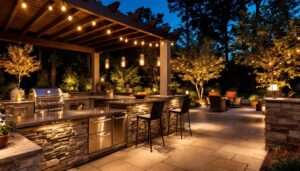
ToggleOutdoor kitchens have become the heart of backyard entertaining, but there’s one thing many homeowners overlook: proper lighting. Without it, you’re grilling in the dark, squinting at prep work, and missing out on evening gatherings. Outdoor kitchen lighting isn’t just about visibility, it sets the mood, extends your usable hours, and makes cooking safer and more enjoyable. Whether you’re flipping burgers at dusk or hosting friends under the stars, the right lighting transforms a functional space into an inviting outdoor room that works as hard as you do.
Key Takeaways
- Outdoor kitchen lighting serves three critical functions: safety for food prep, extended usable hours, and ambiance that transforms a functional space into an inviting outdoor room.
- Task lighting for outdoor kitchens should deliver 50 to 75 foot-candles of light mounted 24 to 36 inches above countertops using weather-resistant LED fixtures rated IP65 or higher.
- Layer your outdoor kitchen lighting with task lights for food preparation, ambient lighting for warmth (10 to 20 foot-candles), and accent lights to highlight architectural features and add visual interest.
- LED bulbs are essential for outdoor kitchen lighting, consuming 75 to 80% less energy than halogen alternatives and lasting 25,000 to 50,000 hours with minimal heat output.
- Proper placement is crucial: position lights 30+ inches from intense grill heat, use separate circuits with dimmers for each lighting layer, and ensure all fixtures have weather-resistant housings with replaceable gaskets.
- All outdoor lighting circuits must comply with local building codes and NEC requirements, including GFCI protection within 6 feet of water—hiring a licensed electrician for hardwired installations ensures safety and code compliance.
Why Outdoor Kitchen Lighting Matters
Outdoor kitchen lighting serves three critical jobs: safety, function, and ambiance. Without adequate task lighting over your grill and prep surfaces, you’ll struggle to cook safely and accurately, undercooked chicken isn’t just unappetizing, it’s a food safety risk. Proper lighting reduces accidents, helps you read recipe cards, and lets you see temperature gauges on your grill clearly.
Beyond safety, lighting extends your outdoor season. You’re no longer stuck eating dinner at 5 p.m. in winter or rushing to finish before dark. A well-lit outdoor kitchen becomes an evening destination, whether you’re prepping food at 8 p.m. or just hanging out with friends. Finally, thoughtfully layered lighting adds visual appeal and creates atmosphere, the difference between a bare corner and an inviting outdoor room. This is where ambient and accent lighting come in, softening the workspace and making the space feel intentional rather than industrial.
Types of Outdoor Kitchen Lighting Fixtures
Task Lighting for Food Preparation
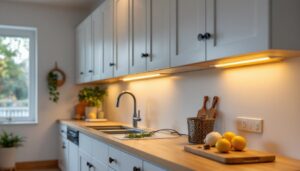
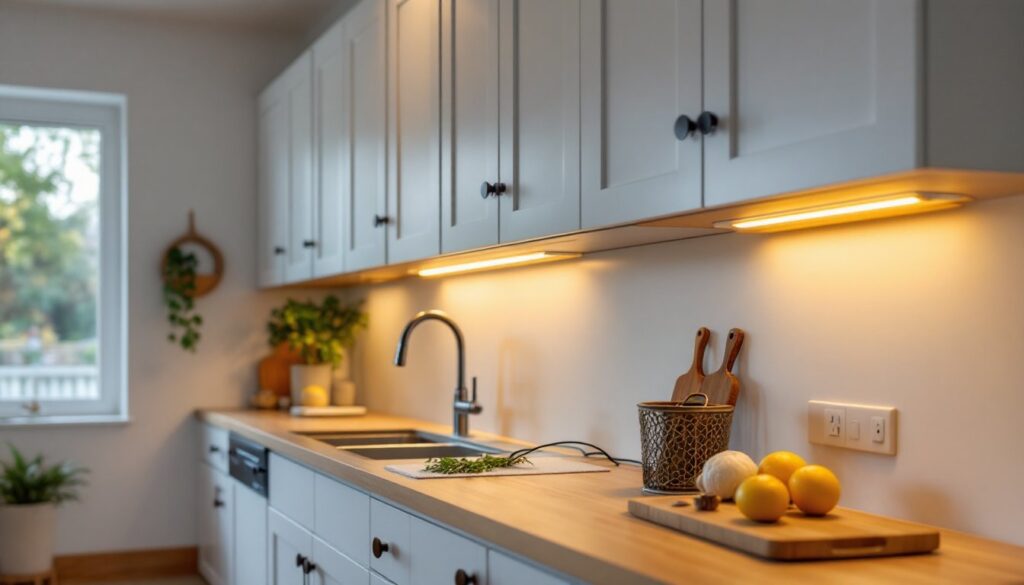
Task lighting is your workhorse. It’s bright, focused, and positioned directly where you need to see clearly, over the grill, the countertop, and the sink. Under-cabinet lights or linear LED strips mounted 24 to 36 inches above countertops deliver 50 to 75 foot-candles of light, which is ideal for food prep. Recessed or pendant fixtures positioned above the grill provide additional overhead illumination.
When choosing task fixtures, look for weather-resistant aluminum or stainless steel housings rated IP65 or higher (meaning they resist water spray and dust). LED bulbs are non-negotiable here, they run cool (critical when mounted near grills), use 75% less energy than incandescent bulbs, and last 25,000 to 50,000 hours. Aim for a color temperature of 3000K to 4000K (warm to neutral white), which is honest enough for food prep without the harsh blue-white of 5000K+ lights.
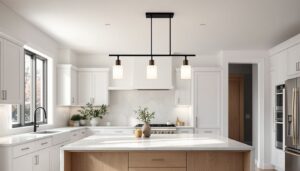
Consider pendant lights hung from a pergola or soffit, they’re stylish and deliver concentrated light to work zones. If you’re mounting lights directly above a grill, ensure they’re positioned 30+ inches away from intense heat and use fixtures rated for outdoor kitchen proximity to avoid damage.
Ambient and Accent Lighting
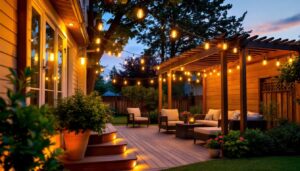
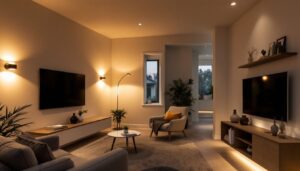
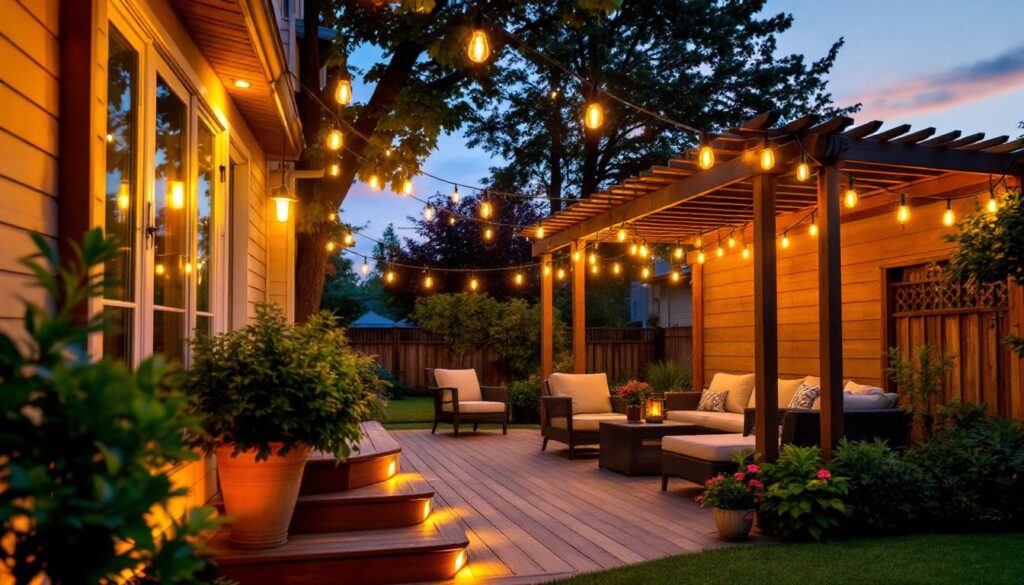
Ambient lighting is the soft glow that makes your outdoor kitchen feel welcoming. String lights, landscape path lights, and wall-mounted sconces create layered illumination that reduces glare from harsh task lights. Aim for 10 to 20 foot-candles for ambient zones, enough to see comfortably, not so bright that you’re squinting.
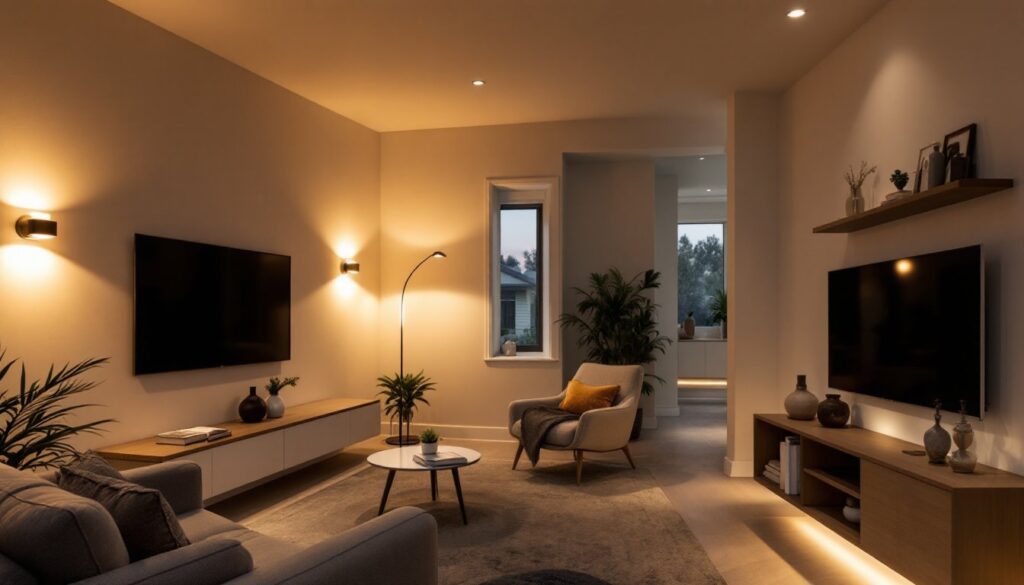
Accent lighting highlights architectural features, plants, or decorative elements. Uplighting on trees, downlighting under eaves, or spotlights on stone or brick add depth and visual interest. This layer turns a purely functional space into one that looks intentional and premium. Color-changing or dimmable accent lights let you adjust mood: bright for evening cooking, dimmed for post-dinner relaxation. When layering these systems, you want independence, separate switches or smart controls let you dial each layer up or down based on your needs. A combination of rustic lighting for warmth and modern task fixtures creates a balanced, inviting aesthetic that works whether you’re prepping a weeknight meal or hosting a weekend feast.
Best Practices for Layout and Placement
Start by mapping your outdoor kitchen zones: the grill, prep counter, serving area, and seating. Each zone needs appropriate lighting, don’t rely on a single overhead fixture to do everything. Task lighting should be positioned 24 to 36 inches above countertops and set back about 12 inches from the counter edge to minimize shadows. For grills, mount pendant or recessed lights 30+ inches to the side or slightly forward, never directly above, since heat and smoke damage fixtures.
Budget roughly 15 to 20 lumens per square foot for task areas and 1 to 5 lumens per square foot for ambient zones. A standard 4-foot countertop with adequate task lighting needs around 1,200 to 1,600 lumens total, achievable with two to three well-placed LED fixtures. Use dimmers and separate circuits for different layers: this flexibility is invaluable.
Consider sight lines carefully. Avoid glare by aiming lights downward or using diffusers and shields. If you’re adding string lights or bistro lights for ambient effect, hang them at eye level or just above, typically 7 to 10 feet high. Elevation differences matter: if your outdoor kitchen is sunken or on a slope, adjust fixture heights accordingly. A lighting store specialist can help verify appropriate fixture placement for your specific layout, ensuring balanced illumination without dead zones or excessive glare. Finally, account for seasonal changes, summer shadows differ from winter, so test your layout at different times of year if possible.
Energy-Efficient and Weather-Resistant Solutions
LED technology is now the standard for outdoor kitchen lighting, there’s really no reason to consider incandescent or halogen alternatives anymore. LEDs produce minimal heat (safe for kitchens), consume 75 to 80% less energy than older bulbs, and last 3 to 5 times longer. A typical LED downlight uses 12 to 18 watts versus 50 to 65 watts for halogen, translating to roughly $30 to $50 per year in energy savings per fixture.
Weather resistance is non-negotiable. All outdoor fixtures must have IP65 ratings at minimum (dust-tight and water-jet resistant). Look for stainless steel, marine-grade aluminum, or powder-coated metal housings. Avoid bare copper or uncoated iron, which corrode quickly near salt water or in humid climates. Gaskets and seals should be replaceable silicone or rubber, not degraded plastic.
Solar-powered pathway lights are tempting but inconsistent. They work best in sunbelt regions with reliable sun: in northern climates or shady yards, they charge slowly and dim early. If using solar accents, pair them with hardwired task and ambient systems for reliability. Smart outdoor lighting systems offer convenience and efficiency, motion sensors eliminate the need for manual switches, and remote dimmers let you adjust brightness without running outside. But, ensure any smart fixtures are rated for wet locations and have backup manual controls in case of app failures or wifi outages.
For wiring, bury outdoor circuits at least 12 inches deep (18 inches is safer) and use conduit in high-traffic areas. Wire gauge matters: #12 AWG for standard circuits, #10 AWG for runs over 100 feet. Consult local building codes, some jurisdictions require permits for outdoor electrical work, and the NEC (National Electrical Code) mandates GFCI protection for all outdoor receptacles and most lighting circuits within 6 feet of water. Hiring a licensed electrician for any hardwired installations is wise: outdoor electrical work isn’t a DIY project if codes require it. Recent guides on outdoor lighting design emphasize proper layering and protection, and smart home integration continues to evolve as technology advances.
Conclusion
Outdoor kitchen lighting transforms a functional space into a true outdoor living area. By combining task lighting for safe food prep, ambient fixtures for warmth, and accent lights for visual interest, you create a layered system that adapts to your needs. Invest in quality LED fixtures with solid weather ratings, plan your layout thoughtfully, and don’t skip electrical safety, the small upfront effort pays off in years of trouble-free, energy-efficient outdoor cooking and entertaining.