Table of Contents
TogglePathway lighting transforms an ordinary backyard into a functional, welcoming outdoor space, and it’s one of the most rewarding DIY projects a homeowner can tackle. Whether you’re lighting a stone walkway, creating safe access to a deck, or simply adding curb appeal, outdoor pathway lighting serves both practical and aesthetic purposes. Beyond safety (preventing trips and falls), well-placed lights define your landscape architecture, extend usable evening hours, and boost home value. The good news: modern pathway lighting systems are accessible to DIYers of all skill levels. From solar stake lights you can install in an afternoon to permanent in-ground fixtures, the options fit every budget and commitment level. This guide walks through design fundamentals, fixture types, and installation essentials to help you light up your landscape.
Key Takeaways
- Outdoor pathway lighting combines safety, aesthetic appeal, and home value by preventing trip hazards while creating inviting nighttime landscapes with proper layered lighting design.
- Solar LED stake lights offer the easiest DIY installation with zero wiring, requiring only soil insertion and south-facing positioning, while low-voltage in-ground systems provide a sleek permanent solution for homeowners ready to invest in trenching and professional results.
- Design your pathway lighting layout by mapping fixture spacing (3–4 feet for solar stakes, 4–6 feet for task lighting) and selecting appropriate brightness levels (50–150 lumens for solar accents, 60–80 lumens for front walkways) to balance function and aesthetics.
- Low-voltage 12V in-ground pathway fixtures operate safely without shock risk and require minimal maintenance beyond annual cable inspections, while LED bulbs rarely fail and provide long-term durability when installed with proper cable routing away from foot traffic.
- Pair pathway lighting with warm white (2700K) color temperature for traditional homes or cool white (4000K) for modern landscapes, and integrate photocell sensors or timers for automatic dusk-to-dawn operation that reduces energy waste and improves security.
Why Outdoor Pathway Lighting Matters for Your Home
Pathway lighting is far more than decorative: it’s about creating safe, functional outdoor spaces. Unlit walkways and steps are injury hazards, especially at dusk and night. A well-lit path guides visitors and residents safely from the driveway to the front door, around garden features, and to seating areas.
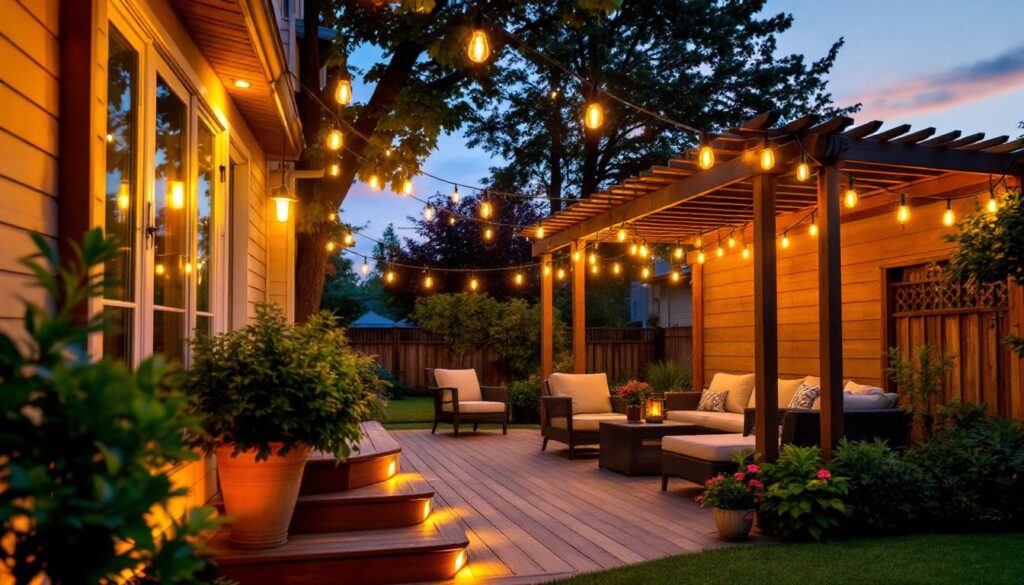
Beyond safety, pathway lighting amplifies landscape design and architectural details you may not show off during the day. Uplighting a tree, accenting a fence line, or silhouetting plantings adds visual interest and depth to nighttime views from inside the home. This layered lighting approach, combining task, accent, and ambient light, is a hallmark of professional landscape design.
Home value is a tangible benefit, too. Properties with thoughtful outdoor lighting typically appeal more to buyers and photograph better in real estate listings. Security improves as well: consistently lit pathways and entry points discourage unauthorized access and create an impression of occupancy.
Types of Pathway Lighting Solutions
LED Stake Lights and Solar Options
LED stake lights are the most DIY-friendly option and require zero wiring. These small fixtures push into soil, gravel, or mulch and operate on rechargeable batteries (solar) or replaceable AAs. Solar LED stakes charge during the day and automatically illuminate at dusk, no timer or wiring needed. Most have integrated photocells, so they turn on and off based on available light.
Solar stake lights vary widely in brightness and build quality. Look for fixtures rated 50–150 lumens for pathway accent lighting: anything brighter may wash out detail. Check reviews for battery longevity: cheap units often fail after a season because batteries don’t recharge efficiently or hold charge poorly. Brands using lithium-ion batteries tend to last longer than NiMH alternatives, especially in cold climates.
For a pathway, space solar stakes 3 to 4 feet apart to create continuous light without gaps. Installation is instant: remove the solar dome, flip on the switch, push the stake into soil, and replace the dome. Drawbacks include seasonal performance dips in cloudy regions and the need to clean solar panels periodically for efficiency.
In-Ground and Recessed Fixtures
In-ground lights and recessed path fixtures offer a sleek, permanent look and greater brightness control. Low-voltage in-ground fixtures (typically 12V) sit flush with walkways or borders and project light upward or outward. These require trenching, running cable, and installing a transformer near an exterior outlet.
In-ground fixtures suit pathways because they’re nearly invisible during the day and won’t catch toes or lawn mower blades if installed properly. Most come with replaceable LED bulbs or integrated LEDs and lenses in various beam angles (narrow spotlights or wider floods). Material matters: solid brass, aluminum, or stainless steel fixtures resist corrosion better than plastic.
Recessed step lights and riser lights mount on or into deck steps, patio edges, or raised beds. These provide subtle, contained illumination that guides feet without creating glare. Stainless steel models with LED sources rated for outdoor use are worth the extra cost: they’ll survive freeze-thaw cycles and salt spray far longer than cheap alternatives.
Planning Your Pathway Lighting Layout
Before buying any fixtures, sketch your pathway on paper with accurate measurements. Note existing obstacles (trees, underground utilities, drainage), nearby power sources, and sightlines from the house and driveway.
Start by identifying the path’s primary function: Is it a utilitarian walkway requiring bright task lighting, or an ambient accent pathway? A front walk to the front door benefits from 60–80 lumens per fixture, spaced 4 feet apart. A garden path through landscaping can use lower brightness, 20–50 lumens, with 5- to 6-foot spacing for a softer effect. Avoid pointing lights directly at eyes: angle fixtures downward or use shields to minimize glare.
Consider sight lines from your home’s interior. Pathway lighting visible through windows at night should complement your interior color temperature. Warm white (2700K) creates a welcoming, intimate feel and blends well with traditional and cottage-style homes. Cool white (4000K) suits modern, contemporary landscapes. Mixing temperatures on one pathway can look chaotic.
Building codes vary by jurisdiction, but most require pathways serving as emergency egress routes to meet minimum foot-candle levels (typically 0.2 to 1.0 foot-candles). Check with your local building department before trenching for low-voltage systems: you may need to locate underground utilities using a free call-before-you-dig service. Many modern outdoor lighting designs draw inspiration from hardscape and landscape principles found in resources like hardscape design guidelines, which balance aesthetics with function.
If running permanent wiring, plan the cable route to avoid foot traffic and mowing areas. Route cables along fence lines, under mulch borders, or beneath permeable pavers where possible. Label your transformer and circuit so future maintenance is straightforward.
Installation and Maintenance Essentials
Solar stake light installation is straightforward: clear debris from soil, push stakes to full depth (typically 4–6 inches), and position so solar domes face south (in the Northern Hemisphere) for maximum sun exposure. That’s it, no tools, permits, or wiring. Expect 6–8 hours of charging on a sunny day for 8–12 hours of runtime.
For low-voltage in-ground systems, the prep work is critical. Mark your cable route with spray paint and check twice for buried utilities before digging. Dig a shallow trench (typically 6–8 inches deep) along the path, laying the 12V cable (usually 16-gauge or 14-gauge copper) in the trench. Secure the cable with stakes every 2 feet to prevent shifting. Mount the outdoor transformer on an exterior wall within 100 feet of the furthest fixture: beyond that distance, voltage drop becomes noticeable and brightness drops.
Install fixtures per manufacturer specs, most in-ground lights require a hole saw and a prepared socket in pavers or soil. Backfill trenches carefully, avoiding sharp rocks that might nick the cable. Test all fixtures before finishing: a single connection failure will stop voltage flow to downstream lights. Many homes use low-voltage systems because they operate safely on 12V (versus 120V household current), eliminating shock risk and the need for a dedicated GFCI circuit (though some installations use GFCI protection anyway for added safety).
Maintenance is minimal with LED fixtures. Clean solar panels monthly with a soft cloth and water: dirt and pollen reduce charging efficiency. Check for standing water or debris in fixtures after heavy rain. If a solar stake stops charging, the battery is likely spent, replacements are inexpensive. For in-ground systems, inspect cables annually for rodent damage or shifting. LED bulbs rarely fail, but when they do, replacements are plug-and-play. Store fixtures indoors during harsh winter months if you’re in a cold climate, or leave them out if they’re rated for your zone.
If your pathway is visible from the road or entrance, consider turning lights on/off automatically with photocell sensors (included in most solar models) or adding a smart outdoor timer to hardwired systems. Dusk-to-dawn operation reduces energy waste and is less intrusive than all-night illumination.
Conclusion
Outdoor pathway lighting is an achievable, impactful DIY project that pays dividends in safety, curb appeal, and usability. Solar stake lights offer instant gratification for renters or experimentation: low-voltage in-ground fixtures deliver permanent, polished results for homeowners ready to invest a weekend in trenching and wiring. Start with a simple sketch, choose fixtures matched to your pathway’s function and style, and don’t skip the prep work, proper planning prevents most installation headaches. With the right fixtures and a straightforward installation process, your lit pathway will transform evening access while enhancing the overall aesthetic of your outdoor living space. Resources like Better Homes & Gardens and Southern Living offer seasonal design inspiration and project ideas to complement your new lighting design.