Table of Contents
ToggleA well-lit pool does more than show off your investment after dark, it transforms a backyard into an usable living space and keeps swimmers safe when the sun goes down. Whether you’re hosting summer gatherings or simply extending your evening relaxation time, pool lighting has evolved far beyond basic underwater bulbs. Modern pool lighting combines energy efficiency, smart home integration, and design flexibility to create ambiance that fits your style and budget. This guide walks you through everything a DIY homeowner needs to know about selecting, planning, and installing outdoor lighting around your pool area.
Key Takeaways
- Outdoor lighting around your pool enhances both safety and property value by providing clear visibility for swimmers and creating a resort-like ambiance that buyers notice immediately.
- LED fixtures are the smart choice for pool lighting, using 70–80% less energy than older systems and lasting 25,000–50,000 hours, which pays for itself through energy savings over time.
- Effective outdoor lighting around pools requires layered zones: minimum 10–20 foot-candles on decks, 5–10 foot-candles in the water, and warm white LEDs (2700K–3000K) in living areas for comfort.
- Low-voltage 12V landscape lighting is ideal for deck and pathway safety and is DIY-friendly, while underwater and GFCI-protected circuits must follow code and may require a licensed electrician for bonded grounding systems.
- Strategic placement with dimmers on 50% of circuits allows you to adjust mood and energy use without rewiring, transforming your pool into a year-round living space.
Why Pool Lighting Matters Beyond Aesthetics
Pool lighting serves a dual purpose that makes it one of the smartest outdoor investments you can make. First, there’s safety: swimmers and guests need clear visibility to navigate around the deck, stairs, and water entry points after dark. Second, there’s functionality, proper lighting extends your pool season by making evening swims enjoyable and giving you control over the pool environment year-round.
Beyond safety and usability, lighting affects property value and resale appeal. Homes with well-designed outdoor spaces command higher prices, and pool lighting is a visual anchor that buyers notice immediately. Unlike cosmetic upgrades, functional lighting solves real problems: wet surfaces become hazardous in low light, and poorly lit pools look uninviting rather than resort-like.
Benefits of Strategic Outdoor Lighting Around Your Pool
Strategic lighting placement delivers layered benefits. It creates multiple zones, ambient light for general visibility, task lighting for deck areas, and accent lighting for visual interest, allowing you to adjust mood and energy use depending on the situation. A lit pool area also deters unwanted visitors and adds a security dimension that goes beyond the aesthetic appeal.
Energy efficiency has improved dramatically in pool lighting. LED fixtures use 70–80% less energy than older incandescent and halogen systems, cutting your electrical load significantly. Combined with timers, dimmers, and smart controls, you can run sophisticated lighting for less than a single outdoor outlet previously cost to operate.
Safety and Visibility Considerations
Wet surfaces and moving water create unique hazards, making uniform, shadow-free lighting essential. Aim for minimum 10–20 foot-candles (a unit of light intensity) around deck areas where people walk. The pool itself benefits from 5–10 foot-candles to allow swimmers to see obstacles and other people underwater without creating uncomfortable glare.
Avoid placing lights where they shine directly into swimmers’ eyes, this causes disorientation and defeats the purpose. Use warm-white LEDs (2700K–3000K color temperature) around living areas and cooler whites (4000K–5000K) for functional deck areas. Always wear safety glasses when working with electrical connections, and turn off power at the breaker before any installation work. If your pool has a bonded grounding system (required by code in most jurisdictions), consult a licensed electrician before running new circuits near water.
Energy-Efficient Lighting Options for Pool Areas
LED technology is the standard for modern pool lighting and for good reason. LED lights last 25,000–50,000 hours compared to 1,000–2,000 for incandescent bulbs, and they generate minimal heat, reducing stress on pool chemistry and electrical systems. Most contemporary pool lights come with integrated LED technology, meaning the bulb and fixture are a matched system.
Low-voltage landscape lighting (12V systems) is ideal for deck and pathway lighting around the pool. These systems include a transformer that steps down standard 120V power to a safer, lower voltage. They’re easy to install, require no special permits for most residential applications, and are forgiving of DIY mistakes. Recessed deck lights, bollard lights, and strip lighting all work well in 12V configurations.
For in-pool lighting, you’ll choose between underwater LED fixtures designed for your specific pool type, vinyl-lined, concrete, or fiberglass, and above-water spotlights that create reflection effects. Smart pool lighting systems now offer WiFi or app-based color control, allowing you to adjust colors and intensity without leaving your lounge chair. These systems typically cost more upfront but integrate with existing home automation setups and reduce long-term energy consumption.
Types of Pool Lighting Fixtures and Placement Strategies
Underwater lights are the signature element. In-pool LED fixtures mount in niches (pre-formed pockets in the pool wall) or attach magnetically to vinyl liners. Placement should create even illumination without dead spots or harsh shadows. Most pools benefit from fixtures spaced 15–20 feet apart along walls. These lights not only illuminate the water but also create visual depth and drama, especially when paired with color-changing options.
Deck and pathway lighting prevents trips and defines space. Recessed deck lights sit flush with the surface and provide subtle upward lighting, while bollard lights (short posts, typically 18–24 inches tall) mark edges and transitions without overwhelming the space. Strip lighting along railings or under handrails offers practical visibility. These should use warm-white LEDs (2700K) to feel inviting rather than harsh.
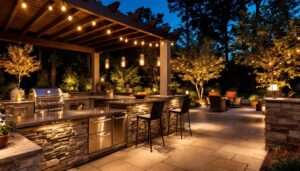
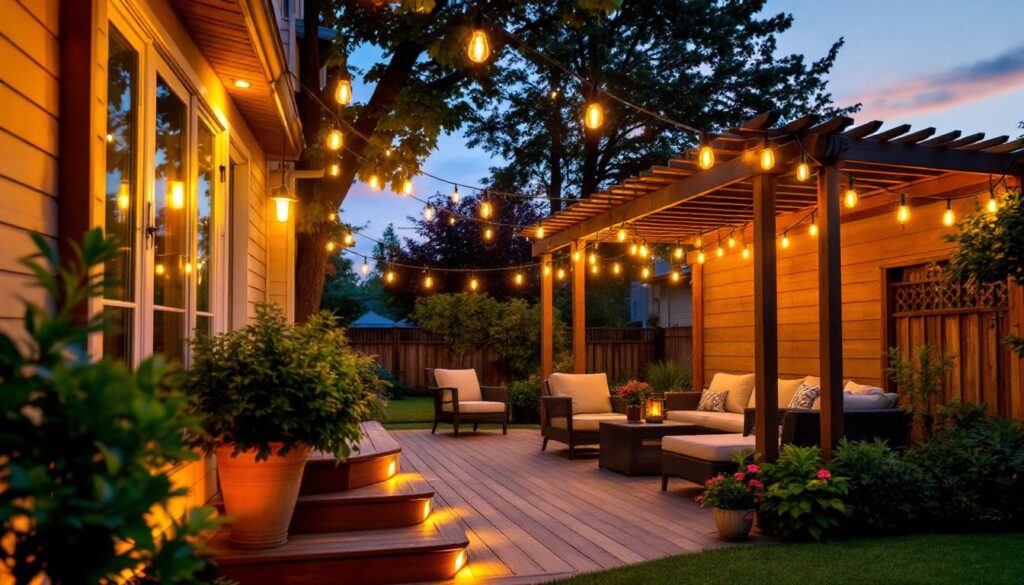
Perimeter and feature lighting adds ambiance. String lights, uplighting on landscaping, and spotlights on architectural features create layered depth. Underwater landscape lights for fountains or water features add visual interest, many designs like those shown in underwater landscape lighting guides work equally well for pool surrounds with small ponds or water elements.
Placement strategy depends on your pool’s purpose. Entertaining areas need brighter, more uniform lighting: relaxation spaces benefit from softer, dimmable fixtures. Use dimmers on at least 50% of your lighting circuits so you can adjust mood without rewiring. Ensure no lights create glare that reflects off the water into lounging areas.
DIY Installation Tips and Best Practices
Before touching any tools, plan your layout. Sketch your pool area to scale and mark proposed light locations. Identify existing electrical outlets and determine whether you need new circuits or can run on existing ones. Most deck and landscape lighting runs on 12V circuits, but in-pool fixtures often require dedicated, GFCI-protected circuits. Check your local electrical code: many jurisdictions require a licensed electrician for anything involving the pool’s bonded system.
For 12V landscape lighting installation: Run low-voltage cable (typically 10 or 12 gauge) from your transformer to each fixture location. Bury cable 4–6 inches deep in conduit or directly in soil if using direct-burial rated cable. Space fixtures every 10–15 feet for even coverage. Connect fixtures using waterproof connectors: snap-fit connectors are easiest for DIY work. Test each light before burying cable. Use waterproof outdoor silicone caulk around any penetrations or connections that contact soil.
For underwater fixtures in existing pools, stop and consult a professional if your pool has bonded grounding or a complex electrical system. If upgrading an existing underwater light, follow your fixture manufacturer’s instructions exactly. Drain the appropriate section, remove the old fixture, and install the new one using the provided gasket and hardware. Over-tightening corrodes materials and creates leaks: hand-tighten then add one-quarter turn with a wrench.
Electrical safety is non-negotiable. Always use GFCI outlets within 6 feet of water (National Electrical Code requirement). Install a disconnect switch within sight of the pool but not less than 5 feet away. If running new circuits, use 14 or 12 gauge wire for landscape circuits and consult code for in-pool circuits, many require thicker wire over longer runs. Wear gloves, safety glasses, and a dust mask when running conduit or digging. If any work involves the pool’s existing bonded system or going beyond simple landscape lights, hire a licensed electrician. The cost is minimal compared to electrical hazards or code violations.
Conclusion
Pool lighting transforms a summer fixture into a year-round retreat while solving real safety and functionality challenges. Start with energy-efficient LEDs, invest in proper deck lighting to prevent accidents, and layer in ambiance with strategic underwater and feature lights. Modern smart home lighting systems integrate seamlessly with pool controls, letting you adjust your outdoor environment from anywhere. Take time with planning and don’t rush electrical connections, a well-designed system will serve your family safely for decades, paying for itself through energy savings and the simple pleasure of an inviting evening swim.