Table of Contents
ToggleUnder cabinet lighting transforms how you work in your kitchen or shop. Poor lighting over countertops forces you to squint, slow you down, and makes food prep feel like a chore. Adding fluorescent under cabinet lights is one of the smartest upgrades a homeowner can tackle, it’s affordable, improves functionality, and creates a more polished look. Whether you’re working with tight workspace corners or dark kitchen islands, this guide walks you through choosing the right fixtures, installing them safely, and keeping them running smoothly.
Key Takeaways
- Under cabinet fluorescent lighting eliminates shadows on work surfaces, improves kitchen safety, and enhances the visual appeal of your space with better light distribution.
- Choose T8 fluorescent tubes over older T12 models for superior energy efficiency; aim for 300–500 lux brightness and cool white (4100K) color temperature for accurate task lighting in kitchens.
- Proper installation requires a dedicated circuit from your breaker panel, thorough surface cleaning before mounting, and professional electrical work if you’re not confident in wiring safety.
- Maintain fluorescent fixtures quarterly by cleaning tubes and reflectors to prevent 20–30% annual output loss from dust and grease buildup.
- LED retrofit tubes offer a long-term upgrade path for under cabinet fluorescent systems, providing 2x energy efficiency and 25,000+ hour lifespan with minimal installation effort.
- Installing dimmer switches with compatible electronic ballasts gives you flexible brightness control for both task work and ambient evening lighting.
Why Under Cabinet Fluorescent Lighting Matters
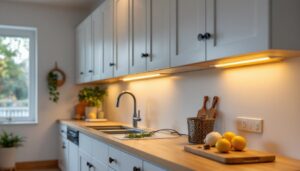
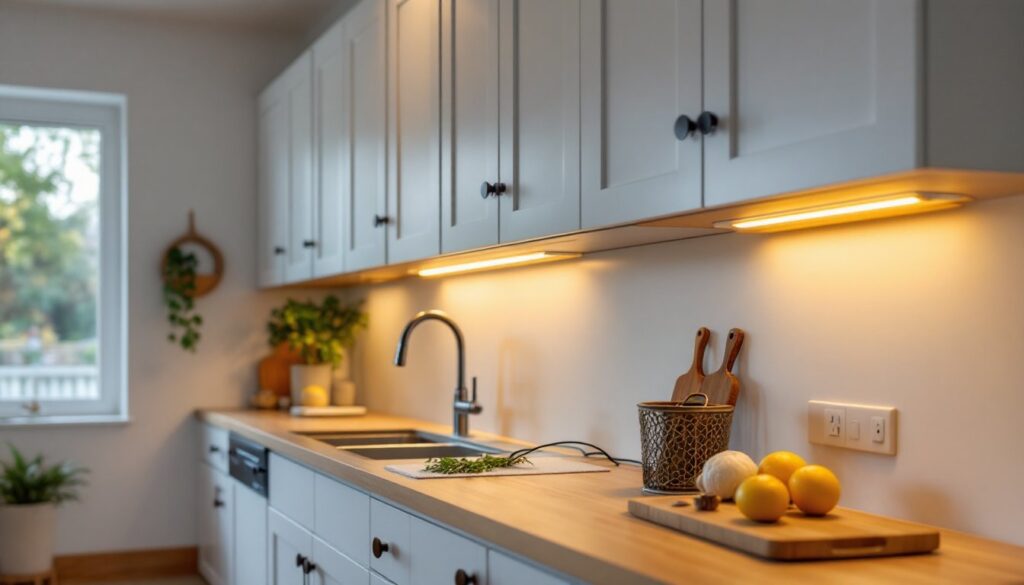
Task lighting over work surfaces isn’t optional, it’s essential. When your hands cast shadows on the cutting board or your stovetop feels dim, you’re working blind. Fluorescent fixtures under cabinets solve this by bouncing light directly onto countertops, eliminating glare and harsh shadows.
Beyond function, under cabinet lights boost kitchen aesthetics. They accent backsplashes, highlight countertop materials, and add visual depth. The light spills down onto work surfaces, making spaces feel larger and more inviting. This is why professional kitchens and commercial workspaces rely on them.
Cost-wise, fluorescent remains efficient. Compared to incandescent, fluorescents deliver more lumens per watt and run cooler, critical when mounted inches above food prep areas. A single under cabinet light uses around 20–40 watts versus 60–100 for traditional bulbs, and lasts 8,000–15,000 hours.
Types of Under Cabinet Fluorescent Fixtures to Consider
Traditional Tube Lights vs. Compact Fluorescent Options
Traditional T8 and T12 fluorescent tubes remain the workhorses of under cabinet lighting. T8 fixtures are thinner (1 inch diameter) and more energy-efficient than older T12 models. They’re affordable, widely available, and integrate into slim plinths between countertop and upper cabinets. A standard 24–48 inch fixture runs about $30–70 depending on quality and ballast type.
Compact fluorescent (CFL) bulbs and fixtures are another option, smaller form factors that fit tighter spaces. But, they’re less popular for under cabinet work because traditional tubes provide better light distribution across a work surface.
When comparing options, consider fixture width. Most standard under cabinet fixtures are 24, 36, or 48 inches long. Measure your cabinet runs before buying. If your cabinet run is 60 inches, you’ll need two 30-inch fixtures or one 48-inch plus supplemental lighting.
Ballasts matter too. Electronic ballasts are quieter and flicker-free compared to magnetic ballasts, but cost slightly more upfront, usually $10–20 extra per fixture. The trade-off is worth it if you’re sensitive to humming sounds or flicker.
How to Choose the Right Brightness and Color Temperature
Brightness is measured in lumens, not watts. A standard 40-watt fluorescent tube produces around 2,500–3,000 lumens. For counter lighting, aim for 300–500 lux (a measure of light intensity on a surface). Kitchen designers typically recommend 1.5 foot-candles minimum over work areas, which translates to roughly 16 lumens per square foot.
Calculate it simply: measure your counter run in feet, multiply by depth (usually 24 inches or 2 feet), then multiply by 16. A 48-inch (4-foot) counter by 2-foot depth needs at least 128 lumens, one standard T8 tube covers this comfortably.
Color temperature affects mood and task accuracy. Cool white (4100K) is standard for kitchens and workshops, it mimics daylight and helps you see colors accurately when cooking or detail work. Warm white (2700K) suits dining areas but can mask food presentation. For a kitchen with both prep and dining zones, consider 3000K as a compromise or install separate circuits for different moods.
Always match color temperatures across multiple fixtures so your lighting feels cohesive. Mismatched fixtures create jarring hot and cold zones.
Installation Essentials for DIY Success
Wiring, Mounting, and Safety Considerations
Before you buy tools, confirm your setup. Under cabinet fluorescents need dedicated power, tapping into an existing outlet is risky and often violates code. A licensed electrician should run a new 15-amp or 20-amp circuit from your breaker panel. If you’re comfortable running wiring, obtain a permit and have work inspected. If not, hire an electrician for the circuit only: you can handle fixture mounting.
Mounting is where DIYers excel. Fixtures mount to cabinet undersides using pre-drilled holes and self-tapping screws (usually provided). A cordless drill-driver and a 2-foot level are essential. Use self-adhesive aluminum channels if your cabinet undersides are too thin or veneered (these hold the fixture and look professional).
Here’s the critical prep step most DIYers skip: clean and degrease the mounting surface. Cabinet undersides collect dust and grease. Wipe with a TSP (trisodium phosphate) solution or degreaser, let dry, then mount. Adhesive won’t bond to dirty surfaces, and fixtures can sag after weeks.
Wiring should use THHN (individual conductor wire) run through flexible conduit or appropriate cable. If you’re not confident in wiring, that’s the moment to call in a pro. Poor electrical work creates fire risk. Always wear safety glasses and work gloves when handling metal fixtures, edges are sharp.
Switch placement matters. Most under cabinet circuits run to a switch near your main sink or prep area. Some homeowners prefer in-line switches on the fixture cord itself, though hardwired switches are cleaner.
Maintaining and Upgrading Your Under Cabinet Lights
Fluorescents are low-maintenance, but neglect speeds decline. Dust and grease buildup reduces output by 20–30% annually. Clean fixtures quarterly: turn off power, wipe tubes and reflectors with a soft, dry cloth. For stubborn buildup, a slightly damp cloth works, but let fixtures dry before powering back on.
Tube replacement is simple. Most standard fixtures use T8 tubes rated 3500K–4100K. When a tube dims noticeably (after 8,000–12,000 hours, roughly 3–5 years), replace both tubes together, mixed ages flicker. Tubes cost $3–8 each. Keep spares on hand.
If ballasts hum loudly after years of use, replacement runs $20–40, worthwhile if the fixture otherwise works. Modern ballasts are quieter and more efficient.
An upgrade path many DIYers consider is LED under cabinet strips. They’re newcomers to the space, more efficient (2x fluorescent), last 25,000+ hours, and run cooler. Installation mirrors fluorescent mounting, though some LED strips use adhesive instead of screws. Many homeowners retrofit old fluorescent housings with LED retrofit tubes compatible with existing ballasts, avoiding full replacement costs.
Another upgrade is adding dimmer switches to your fluorescent circuit. This requires an electronic ballast and compatible dimmer, standard dimmers don’t work with magnetic ballasts. Dimming flexibility lets you adjust brightness for task work versus ambient evening light.
Regular inspection catches problems early. Look for signs of moisture or corrosion on fixture bodies, especially in steamy kitchens or bathrooms. If you spot rust or discoloration, the ballast or wiring may be failing, replace before shorts occur.
For advanced projects like integrating motion sensors or smart controls, work with an electrician. These add convenience but require careful wiring and code compliance. Many modern under cabinet fixtures come with integrated dimmers or wireless control as options, worth the premium if you value that flexibility.