Table of Contents
ToggleIsland kitchen lighting is one of those elements that separates a functional kitchen from one that actually feels great to cook and gather in. It’s not just about running electricity to a fixture and calling it done, the right lighting transforms your island from a prep surface into a welcoming hub that works hard during meal prep and shines during family dinners. This guide walks through the nuts and bolts of choosing, planning, and installing island lighting that matches your space and lifestyle.
Key Takeaways
- Island kitchen lighting should provide 50–75 foot-candles of task brightness while remaining soft and inviting, balancing functional prep work with a welcoming atmosphere.
- Pendant lights with diffusers are the most popular choice for islands, typically spaced 24–36 inches apart and hung 12–18 inches above the counter to prevent glare and maintain sightlines.
- Electrical installation requires a licensed electrician to safely run wiring and install a junction box; once rough wiring is complete, hanging fixtures is a straightforward assembly process.
- Match island lighting finishes to your kitchen’s existing hardware and style to create a cohesive look, and avoid mixing too many metal finishes in one space.
- Dimmable LED bulbs in 3000K–4000K color temperatures paired with a dimmer switch allow you to adjust island kitchen lighting throughout the day for both task clarity and evening ambiance.
- Proper ceiling color and fixture sizing ensure the island functions as the kitchen’s visual and functional hub without creating shadows, hotspots, or an overly cramped feel.
Why Island Kitchen Lighting Matters
Your kitchen island isn’t just a countertop, it’s a work zone and a gathering spot. Proper lighting affects how safely you chop vegetables, how well you read recipes, and honestly, how much you enjoy hanging out in the kitchen with family.
Task lighting over an island prevents shadows where you’re working. Nobody wants to dice onions in shadow. At the same time, ambient light from those fixtures sets the mood when guests are perched on stools. The kind and placement of your island lighting hits both jobs simultaneously if you choose smartly.
Under-lit islands lead to eye strain and poor prep work. Over-lit islands feel harsh and clinical. The sweet spot is layered lighting: bright enough for tasks (typically 50–75 foot-candles over the work surface), soft enough to feel inviting in the evening. Quality fixtures also reduce glare off countertops and create visual balance in an open kitchen.
Types of Island Lighting Fixtures
Pendant Lights and Hanging Options
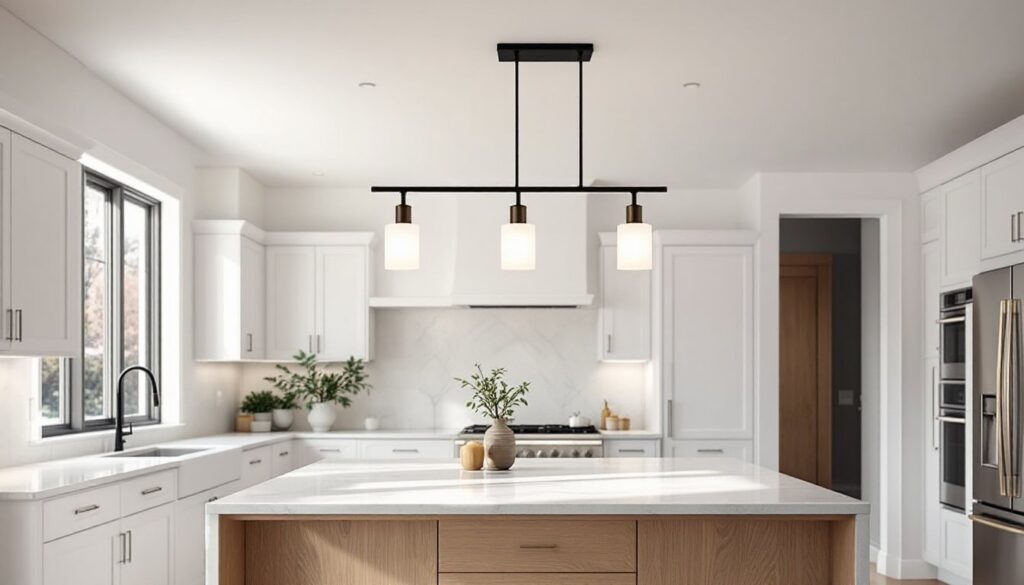
Pendant lights are the go-to for island lighting. They hang from the ceiling on a cord, chain, or rod and deliver light downward onto your work surface. Standard spacing is 24–36 inches on center between pendant fixtures: islands 4 feet long typically get two pendants, while 6-foot islands often use three.
Look for pendants with a bottom opening or diffuser that spreads light evenly. A solid metal dome that points light only down creates hotspots. Glass or frosted diffusers scatter light more naturally across the surface below. Pendant height matters too, most designers hang them 12–18 inches above the countertop to balance visibility with sightlines (you don’t want them blocking conversation across the island).
When shopping, consider a lighting store that stocks a range of styles so you can see how different materials and finishes catch light. Professional designers often pull inspiration from carefully curated sources, and resources like the 10 Easy Pieces pendant lights collection show how top homes style island pendants. Metal finishes, brushed brass, matte black, chrome, integrate into most kitchens, while colorful glass or ceramic adds personality.
Chandeliers and Statement Fixtures
A smaller chandelier or multi-light fixture works beautifully on a larger island, especially if your kitchen has higher ceilings (9 feet or more). Unlike single pendants, a chandelier with 3–6 arms gives you flexibility in brightness and adds visual interest.
Statement chandeliers pull focus, so choose a style that echoes your kitchen’s overall aesthetic, rustic, modern, farmhouse, or transitional. One pitfall: oversized fixtures that occupy too much vertical space or make the island feel cramped. If your island is in an open floor plan, the fixture should feel proportional to the room, not like it’s trying too hard.
Multi-light fixtures also allow for dimming on a single switch, which pendants can too if you use a dimmable driver or dimmer switch rated for your bulb type (LED, incandescent, or halogen all behave differently). Dimming gives you daytime task brightness and softer evening ambiance without rewiring.
How to Plan and Install Island Lighting
Start with your ceiling structure. Most kitchens have joists running perpendicular to the island, which is where you’ll mount your fixture. If your island sits directly below a beam or you’re unsure about joist location, use a stud finder to confirm before drilling.
Electrical work typically requires a licensed electrician in most jurisdictions. If your kitchen doesn’t already have a wire run to the island ceiling, you’ll need to fish a 14-gauge or 12-gauge NM cable through the wall and ceiling to a new junction box above the fixtures. This isn’t a DIY task unless you’re licensed. Running fixture wires without proper installation risks shock and fire. Budget for professional installation, it’s worth it.
Once the electrician installs the junction box and wires the outlet, hanging the fixture itself is straightforward. Most pendant kits include a mounting bracket, canopy, and hanging hardware. The canopy (the trim ring that hides the hole in the ceiling) screws to the bracket, and the pendant hangs from a chain or cord fed through the center.
Installation steps:
- Turn off power at the breaker and verify it’s off with a voltage tester.
- Feed the fixture wires through the canopy, then slide the canopy up to the ceiling.
- Screw the mounting bracket to the junction box using the provided screws.
- Connect the fixture wires to the house wires using wire nuts (black to black, white to white, ground to ground).
- Fold wires into the junction box and secure the canopy to the bracket.
- Install the bulb and shade, then test.
For multiple pendants, the electrician can run one circuit to a multi-outlet junction box, or each pendant taps off a single wire loop. Either way, once the rough wiring is done, hanging is just assembly. Use LED bulbs rated for the fixture’s voltage and wattage, most modern pendants use standard E26 sockets and 60–100 watt equivalent LEDs. LEDs run cooler, last 25,000+ hours, and use 75% less energy than incandescent bulbs.
Design Tips for a Cohesive Look
Match your island lighting to the rest of your kitchen. If your kitchen has warm brass or bronze hardware and rustic lighting elements elsewhere, choose pendants in a similar metal finish. Mixing too many finishes (stainless, chrome, matte black, and brass all in one room) looks chaotic, even if each piece is beautiful on its own.
Consider the island’s height and your seating. Standard kitchen islands run 36 inches tall: bar-height islands are 42 inches. If you have bar seating, hang pendants low enough (12–15 inches above the counter) to frame sitters without creating a cave-like feeling. High-clearance kitchens with 9–10 foot ceilings can accommodate taller pendants or chandeliers.
Color temperature matters. Most kitchens benefit from 3000K (warm white) or 4000K (neutral white) LED bulbs. Warm light feels cozy: neutral light is closer to daylight and works well for task lighting. Avoid anything below 2700K in the kitchen, it reads as too dim and amber. And avoid cool 5000K+ for ambient fixtures: it’s more appropriate for bathrooms and garages.
Dimming control is underrated. A simple dimmer switch on the wall near your island lets you adjust light throughout the day and evening. Pair it with dimmable LED bulbs rated for the dimmer (not all LEDs dim smoothly: check the packaging). This one upgrade makes island lighting feel intentional and adaptable, not fixed.
Finally, think about the ceiling. A white or light-colored ceiling reflects light and makes the space feel larger: a dark ceiling absorbs light and can make a small kitchen feel cave-like. If you’re installing new fixtures and considering a ceiling color change, lighter is almost always better in a kitchen, especially around task zones like the island.
Conclusion
Island kitchen lighting isn’t one-size-fits-all. The best setup balances task brightness, visual appeal, and the mood you want to create. Start by sizing your fixtures to your island, hire a licensed electrician for the rough wiring, and choose finishes that echo your kitchen’s style. When you get it right, the island becomes the heart of the kitchen, a space where cooking is safe and enjoyable, and hanging out feels natural.