Table of Contents
ToggleProper lighting at your makeup vanity isn’t a luxury, it’s the foundation of flawless application. Bad lighting creates shadows, distorts colors, and leaves you wondering why your makeup looks completely different once you step outside. The right vanity lighting combines brightness, color temperature, and positioning to mimic true daylight and eliminate harsh shadows around the eyes and jawline. Whether you’re refreshing an existing vanity or building one from scratch, understanding the key lighting approaches helps you choose fixtures that actually work rather than just look pretty. This guide walks through seven proven makeup vanity lighting ideas for 2026, from classic Hollywood-style setups to smart dimming systems that adapt to your needs.
Key Takeaways
- Proper makeup vanity lighting requires 1500–2000 lumens from multiple angles and a neutral color temperature of 4000K–5000K to accurately represent colors and eliminate unflattering shadows.
- LED strip lights are the most affordable and flexible solution for vanity upgrades, costing $30–80 and conforming to any mirror or cabinet surface without permanent installation.
- Layering overhead lighting, task-focused strips, and accent sconces from different angles creates the most functional and flattering makeup vanity lighting setup for all application needs.
- Natural north-facing light is ideal for makeup application, but south and west-facing windows require sheer curtains to diffuse harsh shadows while maintaining color accuracy.
- Smart dimming systems and adjustable lighting allow you to shift color temperature throughout the day, from warm tones for morning makeup to neutral white for accurate daytime touch-ups.
- Start small with a basic LED strip upgrade ($50) before committing to a full smart-lighting setup, and always test lighting at different times of day before permanent installation.
Why Proper Vanity Lighting Matters for Makeup Application
Makeup application relies on accurate color perception and shadow detection. Overhead lights alone cast unflattering shadows directly under the eyes and cheekbones, the exact areas you’re trying to highlight or contour. Side lighting (like sconces flanking a mirror) reduces shadows and provides even illumination across your face. Front-facing light prevents the harsh contrasts that lead to overblending or over-applying product.
Color temperature matters just as much as brightness. Warm light (2700K or lower) is cozy but skews yellows and oranges, making it hard to judge true skin tone or blend eyeshadow accurately. Neutral white light (4000K-5000K, often called “daylight” or “cool white”) matches natural outdoor light and shows colors as they actually appear. Harsh, overly bright light (6500K+) can feel clinical and actually make blending harder because shadows disappear entirely.
Brightness is measured in lumens, and vanity lighting should deliver 1500–2000 lumens total (combining all fixtures). A single overhead fixture rarely cuts it: layered lighting from multiple angles produces the most flattering, functional results. The best vanity setups combine direct task lighting with accent lighting that reduces shadows without creating new ones.
Hollywood-Style Bulbs and Mirror Lighting
Hollywood-style vanity lighting uses warm white bulbs (2700K–3000K) arranged in a ring or linear pattern around or above a mirror. This setup mimics professional makeup artist lighting and provides even, directional light that flatters while remaining practical.
Classic Hollywood setups use incandescent or halogen bulbs rated 40–60 watts each, spaced 6–8 inches apart around a circular mirror frame. Modern alternatives include LED Edison bulbs or linear LED tubes, which run cooler and use far less energy. A typical Hollywood ring light pulls 60–150 watts total, depending on the number of fixtures.
For a DIY vanity, you can retrofit an existing mirror with adhesive LED strip lights rated for 3000K color temperature, available at most hardware stores for $20–50. Alternatively, purchase a prefabricated LED vanity mirror ($150–400) with built-in bulbs and a power cord. When installing bulbs, ensure they’re dimmable if you plan to adjust brightness for different times of day or lighting conditions.
The main trade-off: incandescent and halogen bulbs emit more heat, which can be uncomfortable during longer makeup sessions. LED options eliminate this but cost more upfront. Both deliver the warm, shadow-reducing glow that Hollywood-style lighting is known for. Safety note: keep any heat-producing bulbs at least 4 inches from flammable materials like curtains or towels.
LED Strip Lights: Modern, Energy-Efficient Brilliance
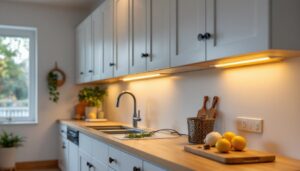
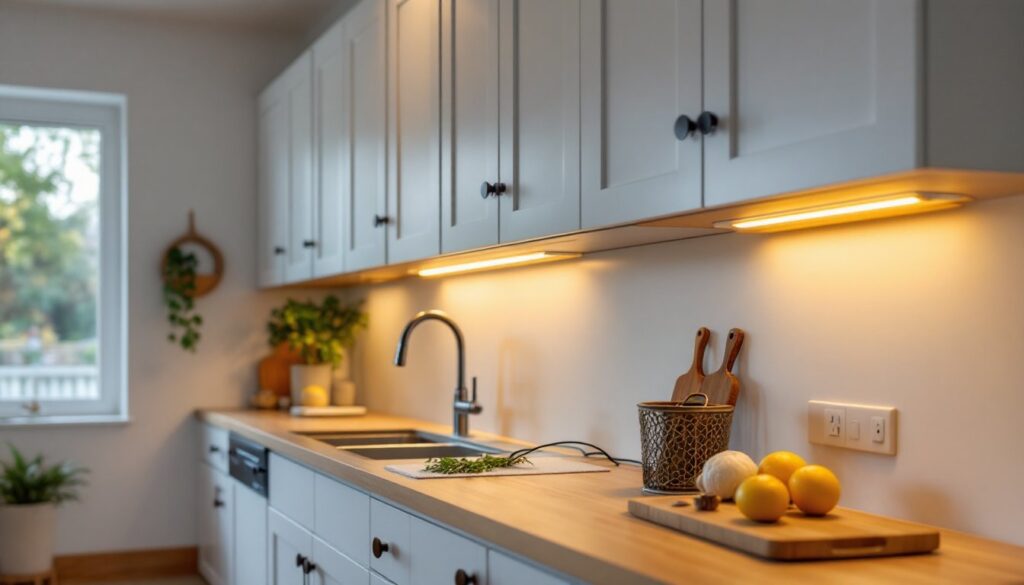
LED strip lights are the go-to for vanity lighting upgrades because they’re affordable, flexible, and energy-efficient. Unlike traditional bulbs, strips conform to mirror frames, cabinet edges, or wall mounting without requiring structural changes.
Choose strips rated 4000K–5000K (neutral to cool white) for accurate color representation. Warm strips (3000K) work if you prefer a softer aesthetic, but they skew makeup colors slightly yellow. Look for strips with a CRI (Color Rendering Index) of 90 or higher, this measures how accurately colors appear under that light. Poor CRI makes it harder to judge undertones or blend seamlessly.
Installation is straightforward: clean the mirror or cabinet surface with rubbing alcohol, peel the adhesive backing, and press the strip in place. Most strips are 5 meters (16 feet) long and come with a plug or battery pack. If you need a custom length, scissors-marked sections allow cutting to size.
Common setups include:
- Perimeter mounting around the mirror frame for even, shadow-free light
- Top-mounted strips above the mirror, angled slightly downward
- Side-mounted strips on vertical surfaces flanking the mirror
Power consumption is minimal, LED strips typically draw 5–10 watts per meter, compared to 40 watts for a single incandescent bulb. Budget $30–80 for a quality, dimmable strip kit. Many come with remote controls or smartphone apps for brightness adjustment, which helps dial in the perfect lighting for morning makeup versus evening touch-ups.
Natural Light Integration and Window Placement
Natural light is the gold standard for makeup application, it’s free, infinitely adjustable, and never distorts color. If your vanity is near a north-facing window, you’re in luck: north light is soft, consistent, and doesn’t change dramatically throughout the day.
South-facing and west-facing windows provide bright light but cast harsh shadows and shift color temperature as the sun moves. If your vanity sits here, use sheer curtains or cellular shades to diffuse direct sunlight without blocking it entirely. This softens shadows and maintains the color-accuracy benefit of natural light.
For vanities far from windows, create a hybrid approach: position the vanity where morning or evening natural light can supplement artificial lighting, then layer in LED strips or sconces for days when natural light is dim. Pair this with neutral-temperature LED bulbs (4000K–5000K) that approximate daylight.
One practical tip: keep a portable daylight-spectrum bulb (around $10–20) in a small desk lamp near your vanity as a backup. On overcast days or during evening makeup sessions, this fills gaps that natural light can’t cover. Building codes don’t restrict window placement in bathrooms or bedrooms where vanities typically live, but ensure your setup doesn’t block emergency egress if required by local code.
Overhead and Accent Lighting Combinations
A truly functional vanity rarely relies on a single light source. The best approach layers overhead, task, and accent lighting to eliminate shadows while maintaining visual interest.
Overhead lighting (ceiling fixtures or recessed lights directly above the vanity) should be diffused, not bare. A flush-mount fixture with a frosted or opal glass cover disperses light evenly and prevents the harsh shadows created by open bulbs. Aim for 3000K–4000K and at least 800–1000 lumens to adequately light the vanity surface.
Accent lighting (like wall sconces flanking the mirror) adds definition and reduces shadows. Standard bathroom sconces are rated 40–60 watts per side and mounted 60–66 inches above the floor. This height places light at roughly face level when you’re seated at a vanity, minimizing unflattering undercutting.
Task lighting (mirror-mounted strips or spotlights) focuses directly on the work area and handles detailed work like eyeliner application or brow grooming. Combine a dimmable overhead fixture with stationary sconces and an adjustable task light for full flexibility.
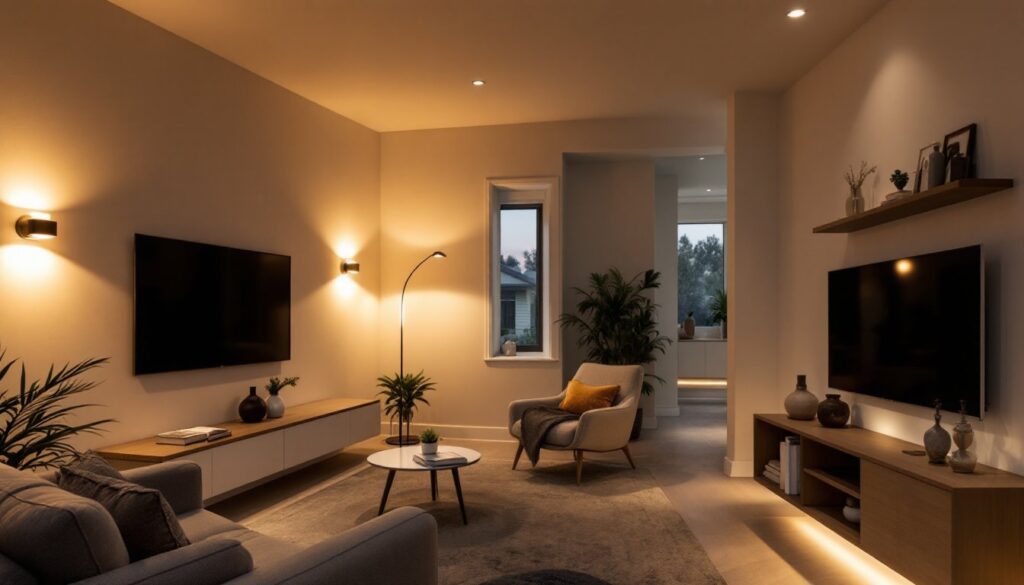
For a sample setup, consider living room lighting principles adapted to the vanity: install a 4000K recessed light overhead (800 lumens), add two wall-mounted sconces (400 lumens combined), and top it with an LED strip around the mirror (200 lumens). This totals roughly 1400 lumens from multiple angles, eliminating shadows while remaining energy-efficient.
Electrical note: bathroom vanity lighting must be on a dedicated circuit per the NEC (National Electrical Code). If adding new fixtures, consult a licensed electrician or check local building codes, bathroom circuits often require GFCI (ground-fault circuit interrupter) protection.
Smart Lighting Solutions and Dimmer Controls
Smart lighting systems let you adjust brightness and color temperature with your phone or voice command, a major convenience if you use your vanity at different times of day or for different purposes.
Smart bulbs (like Philips Hue or LIFX) fit standard sockets and connect via Wi-Fi or Bluetooth. They range from $10–50 per bulb and offer dimmable, color-adjustable options. A 16-million-color bulb lets you shift from warm (morning makeup) to neutral (daytime touch-ups) to cooler tones (evening styling) without rewiring. Most apps include presets for specific tasks or times.
Smart LED strips are even more flexible. They clip into existing fixtures or mount to mirror frames and typically cost $30–100 for a complete kit with remote or app control. Many allow scheduling, automatically dimming at night or brightening for morning routines.
Dimmer switches offer simpler control without smart home integration. A standard slider or rotary dimmer ($15–40) installs in place of your existing wall switch and lets you adjust brightness on the fly. Important: ensure your bulbs are dimmable. Many LED bulbs (especially budget options) flicker or don’t dim smoothly on standard dimmers: look for dimmable LED explicitly on the packaging.
Warm-white dimmers (2700K) work well if you prefer consistent aesthetics. Neutral-white dimmers (4000K) pair better with task-focused setups. Smart lighting solutions increasingly allow fine-tuning both brightness and color temperature, offering the flexibility to match natural light throughout the day.
Practical setup: install a dimmable LED strip around the mirror (roughly $50–80) paired with a basic wall dimmer ($25). This gives you full control over brightness without the cost or complexity of a Wi-Fi system. For more advanced setups, a smart bulb in a sconce or overhead fixture ($30) paired with a voice assistant provides hands-free dimming.
Conclusion
Vanity lighting transforms both the makeup application experience and the overall feel of your space. The most effective setups layer light from multiple angles, overhead, task-focused strips, and accent sconces, all in the 3000K–5000K range to accurately render color. Whether you choose classic Hollywood bulbs, modern LED strips, or smart-controlled systems, prioritize even illumination, shadow reduction, and the ability to adjust brightness. Start with what fits your budget and layout, then add layers as needed. A $50 LED strip around your existing mirror is a game-changer: a full smart-lighting setup comes later. Test your lighting at different times of day before committing to permanent installation. Good vanity lighting makes makeup faster, more accurate, and genuinely enjoyable, worth the investment.