Table of Contents
ToggleHouston’s warm, humid climate and sprawling neighborhoods make outdoor spaces feel like extensions of the home, at least they should. Whether you’re hosting a backyard dinner party or simply want to enjoy your patio after sunset, landscape lighting changes the game. It’s not just about aesthetics: proper lighting enhances safety, security, and usability of your outdoor areas. This guide walks you through everything you need to know about selecting, planning, and installing landscape lighting fixtures that withstand Houston’s weather while making your yard shine.
Key Takeaways
- Landscape lighting in Houston improves safety, security, and usability of outdoor spaces while accommodating year-round outdoor living in warm climates.
- Choose corrosion-resistant materials like aluminum or stainless steel with IP65+ ratings to withstand Houston’s humidity, salt air, and intense UV exposure.
- LED fixtures are far more efficient than incandescent alternatives, lasting 25,000–50,000 hours and reducing energy costs throughout Houston’s extended growing season.
- Low-voltage 12V systems are ideal for most Houston residential properties, requiring no permits and simplifying DIY installation compared to 120V line-voltage systems.
- Proper planning, shielded fixtures that direct light downward, and a reliable transformer with timer control ensure your landscape lighting is both energy-efficient and visually appealing.
Why Landscape Lighting Matters For Houston Homes
Landscape lighting isn’t a luxury, it’s a practical investment that addresses real needs in Houston. The first is safety. Unlit pathways, steps, and driveways create trip hazards and liability issues, especially when guests visit after dark. Well-placed path lights eliminate these dangers without creating harsh shadows.
Security is the second driver. A lit property deters break-ins and makes it harder for intruders to approach unnoticed. Strategic accent lighting on entry points, gates, and perimeter areas compounds this effect.
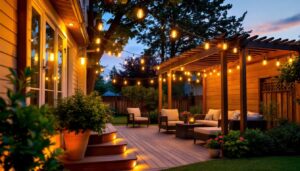
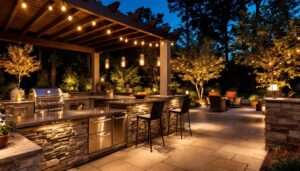
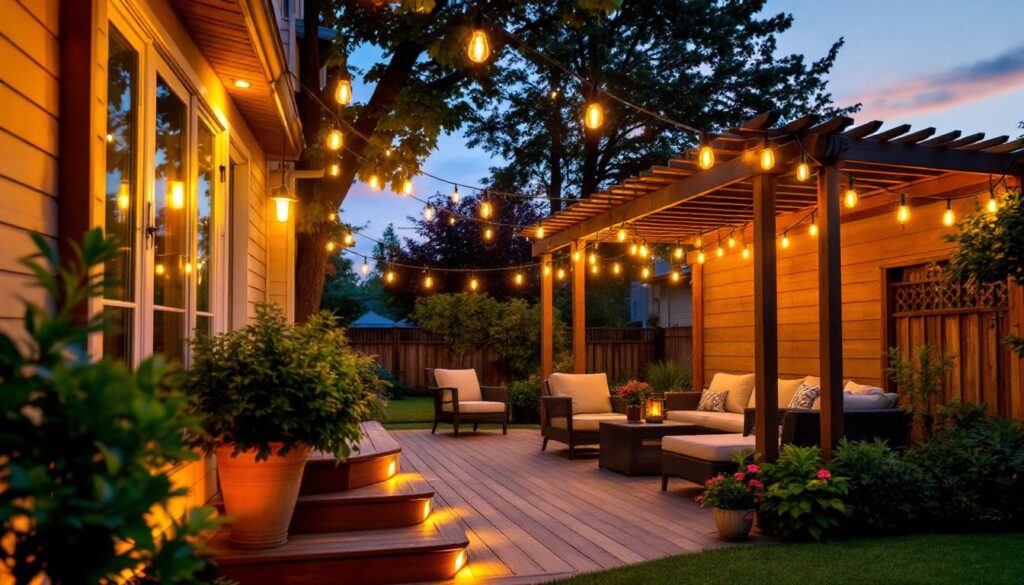
Third is usability. Many Houston homeowners enjoy outdoor living year-round, thanks to mild winters. Landscape lighting extends your outdoor season by letting you entertain or relax comfortably after sunset. A lit pool, deck, or garden becomes an extension of your living space rather than a no-go zone at night.
Houston’s heat and humidity also mean your fixtures need to handle moisture and intense UV exposure. Unlike northern climates where systems can shut down in winter, Houston’s year-round outdoor living demands durable, corrosion-resistant fixtures. Professional Lighting: Transform Your approach ensures your system performs in these conditions.
Types Of Landscape Lighting For Texas Properties
Path Lights And Accent Lighting
Path lights are the workhorse of landscape lighting. These low-voltage fixtures (typically 12V) mount on stakes or posts and cast a soft downward glow along walkways, driveways, and garden beds. Standard path lights stand 12–24 inches tall and use LED bulbs rated between 2 watts and 5 watts, drawing minimal power while providing adequate visibility.
LED path lights last 25,000–50,000 hours compared to incandescent alternatives that burn out in 1,000 hours. For Houston’s endless growing season, LED efficiency matters, your fixtures run more nights per year than in cooler climates. Many modern path lights include a solar charging option, which eliminates wiring but requires unobstructed daylight exposure.
Accent lighting highlights architectural features, specimen plants, or focal points. Uplighting, placing a fixture at ground level pointing upward, emphasizes tree canopies or building facades. Spotlights (30–50 watts for typical applications) deliver concentrated beams ideal for dramatic effect. Grazing lights positioned close to a surface create texture and shadow play on walls or stonework.
For Houston’s tropical landscape, think crepe myrtles, live oaks, and palms, accent lighting transforms these plants into nighttime focal points. A 3000K color temperature (warm white) is standard for residential applications: it mimics incandescent warmth without the heat output. Lighting Store: Transform Your selection ensures you find fixtures sized for your specific features.
Planning Your Houston Landscape Lighting Design
Choosing The Right Fixtures For Your Climate
Houston’s environment is unforgiving. Salt air in coastal areas, high humidity inland, and intense UV radiation from the southern sun all degrade materials quickly. Start with fixture construction: aluminum or stainless steel bodies resist corrosion far better than brass or copper, which oxidize and tarnish in humid climates.
Look for fixtures rated IP65 or higher, this ingress protection rating ensures water-tightness. IP65 means dust-tight and water-jet resistant: IP67 adds submersion capability for situations near pools or water features. Gaskets and seals should be silicone or rubber, not cheap foam that breaks down in heat.
Lighting design in Houston requires addressing glare and light pollution. The International Dark-Sky Association recommends shielded fixtures that direct light downward, not sideways or upward. This approach respects neighbors, reduces insect attraction, and uses energy more efficiently. For deck and patio areas, recessed downlights or semi-recessed fixtures deliver ambient light without harsh glare in your guests’ eyes.
Voltage choice is critical. Low-voltage systems (12V) are safer for DIY installation and require no permits, you’ll run thin wire buried just 4–6 inches deep or tucked along landscape edges. Standard 120V line-voltage systems deliver more power for larger properties or high-wattage fixtures but require conduit, proper burial depth (12–18 inches), and electrical permits. For most Houston residential properties, 12V systems suffice and simplify installation.
Control matters too. A timer or smart controller lets you automate schedules so lights turn on at dusk, off at midnight, saving energy and battery life if using solar fixtures. Dimmers on accent lights let you adjust mood, bright for entertaining, dim for ambient evenings. Professional installers often provide smartphone control, but wired systems from a Lighting Store: Transform Your offer reliable mechanical timers as a low-tech alternative.
DIY Installation Tips For Landscape Lighting
If you’re installing a low-voltage system yourself, here’s the realistic path forward. First, measure your property and sketch fixture placement on paper or using a simple app. Identify all pathways, steps, focal points (trees, water features, entry doors), and the transformer location, typically near an outdoor outlet on your garage, shed, or house.
Materials needed:
- Low-voltage transformer (300W–600W depending on total fixture wattage: multiply wattage of all fixtures and add 20% headroom)
- 12-gauge or 10-gauge low-voltage wire (copper, rated for outdoor use)
- Path lights, uplights, or spotlights (fixtures rated for your climate)
- Wire connectors or junction boxes designed for low-voltage outdoor use
- Wire clips and landscape staples
- A multimeter to test connections
Tools:
- Shovel or spade for digging wire trenches
- Wire strippers
- Screwdrivers (likely Phillips and flathead)
- Voltage tester
- Work gloves and safety glasses
Installation steps:
-
Plan wire routing. Lay out wire path from transformer to each fixture. Avoid high-traffic areas where you might step on buried wire. Run wire along garden bed edges, under mulch, or along the house foundation when possible. Directly burying wire in soil works, but a 4-6 inch trench beneath mulch or gravel offers easier future access.
-
Dig and lay wire. Use a flat shovel to cut a shallow trench, then lay wire in place. Test connections as you go, don’t wait until everything is installed to troubleshoot a faulty connection.
-
Connect fixtures. Most modern low-voltage fixtures use quick-connect terminals: no stripping or soldering required. Follow manufacturer instructions exactly. Incorrect polarity (reversing positive and negative) won’t harm low-voltage systems but may prevent lights from powering on.
-
Install transformer indoors or under cover. The transformer converts 120V household current to 12V. Mount it on a garage wall, shed interior, or covered porch within reach of a GFCI outlet. Don’t leave it exposed to rain: weatherproof enclosures cost $20–50 and prevent corrosion.
-
Test before burying. Plug in the transformer and confirm all lights power on. Check for loose connections. Use a multimeter to verify 12V output at the transformer terminals.
-
Bury wire and mulch. Once tested, cover wire with mulch or topsoil. Mark any junction boxes with landscape flags or small stakes so you remember their location for future maintenance.
Permits and inspections: Low-voltage systems don’t require electrical permits in most Texas jurisdictions, but check your city or county code, Houston and some suburbs have specific rules. Line-voltage (120V) outdoor lighting absolutely requires permits and licensed electrician installation. The cost of a permit ($50–150) is minimal insurance against code violations and safety issues. Resources like Angi and HomeAdvisor list licensed contractors and can clarify local requirements.
Maintenance: LED fixtures require little upkeep, occasional cleaning of lenses and replacing a burnt solar panel or rechargeable battery every 2–3 years. In Houston’s heat, check fixture seals annually: caulk any gaps with silicone to keep moisture out.
Conclusion
Landscape lighting transforms a Houston yard from an afterthought into a functional, beautiful outdoor room. Whether you prioritize safety, security, or ambiance, the right fixtures, chosen for Houston’s climate and installed with care, deliver results that last. Start with a low-voltage system for simplicity and cost-effectiveness, plan your design thoughtfully, and don’t skip the prep work. A weekend of digging and testing pays dividends every evening you step outside.